China's Refiners Slash Runs To Lowest Since 2017, As Asia Refiners Slow Purchases Of Mid-East Oil
The short version
- Fast forward to today when the previously discussed dynamics have gotten progressively worse, and this morning Bloomnberg writes that China’s independent oil refiners have slashed…
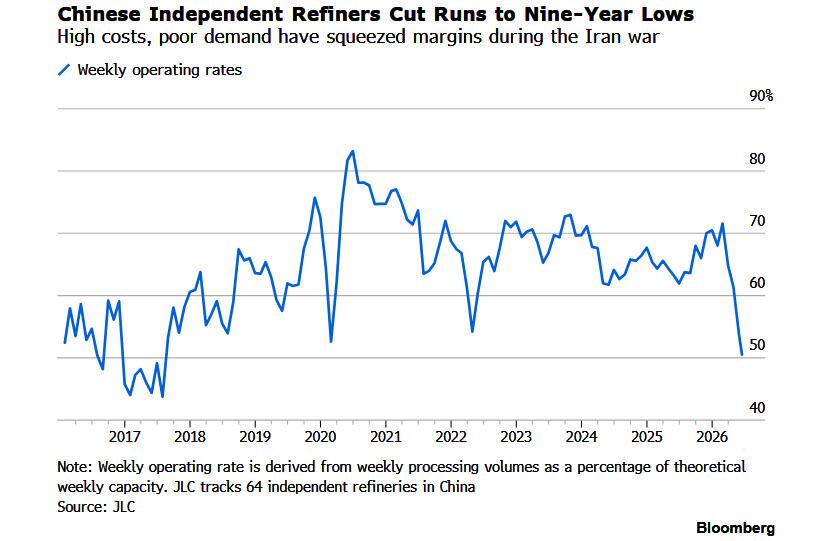
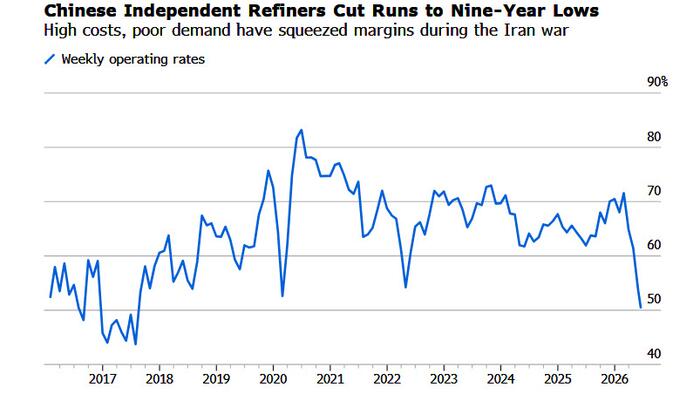
- Run rates at so-called teapots fell to 50.5% in the week to June 21, dropping below pandemic-era lows to the weakest since 2017, according to consultant JLC .
- High feedstock costs, weak domestic fuel demand, and curbs on product exports have squeezed processors’ margins, prompting them to scale back.
- As Bloomberg notes, the nation’s sustained slowdown in flows has brought into focus a nationwide shift away from fossil fuels that’s been driven by greater electrification.
- The teapots’ downturn in run rates comes as Iran is now seeking to revive crude exports under a temporary US sanctions waiver.
The story
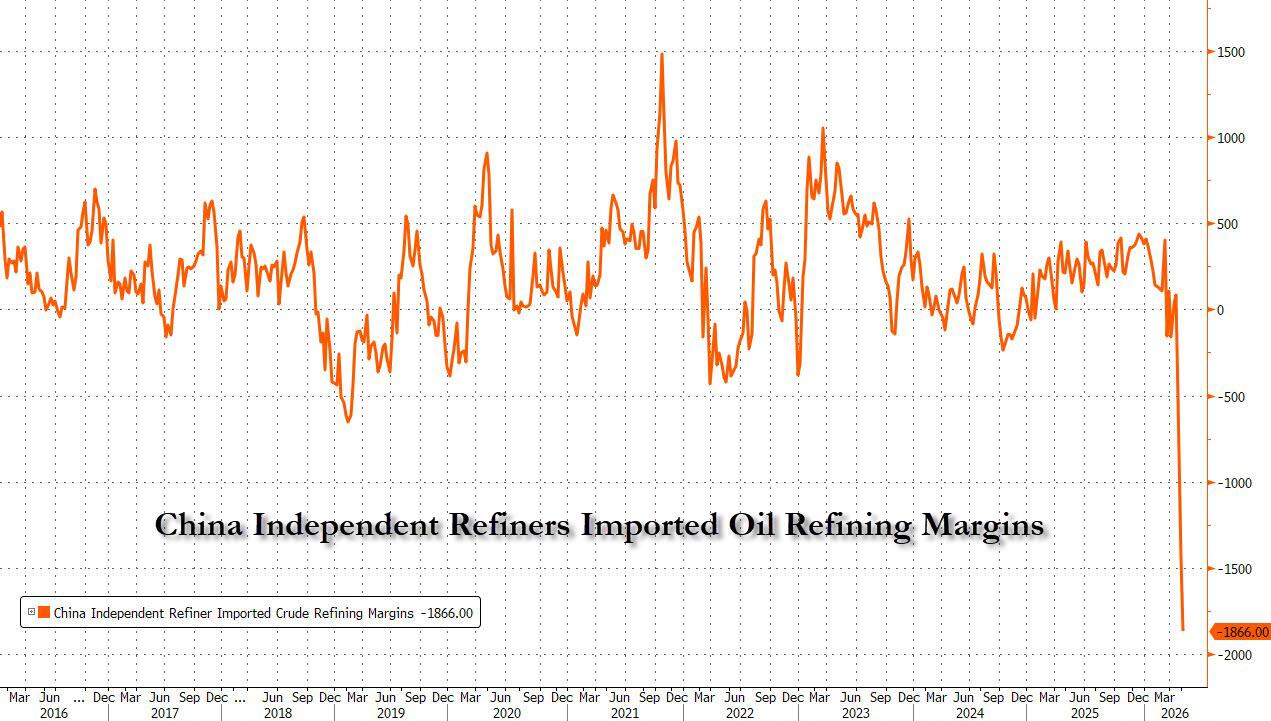
A little over a month ago, we explained that energy traders are "Traders Puzzled As Physical Oil Prices Tumble Amid Surging Chinese Crude Sales, Plunging Imports", and highlighted how already razor-thin independent refiner (teapot) margins had plunged to record negative as a result of the war in Iran and government policies meant to keep prices from rising.
Fast forward to today when the previously discussed dynamics have gotten progressively worse, and this morning Bloomnberg writes that China’s independent oil refiners have slashed operating rates to a nine-year lo.
Run rates at so-called teapots fell to 50.5% in the week to June 21, dropping below pandemic-era lows to the weakest since 2017, according to consultant JLC. High feedstock costs, weak domestic fuel demand, and curbs on product exports have squeezed processors’ margins, prompting them to scale back.
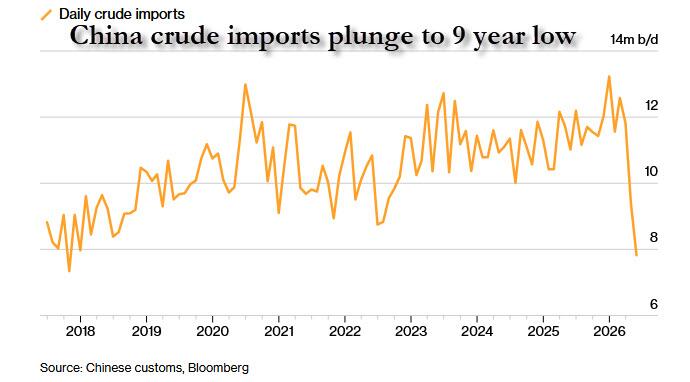
As we noted previously, China - the world’s largest oil importer - sharply reduced crude imports after the conflict erupted in late February as prices initially spiked, sending oil imports to a 9 year low, a key reason why oil prices did not spike even higher in the past few months.
As Bloomberg notes, the nation’s sustained slowdown in flows has brought into focus a nationwide shift away from fossil fuels that’s been driven by greater electrification.
The teapots’ downturn in run rates comes as Iran is now seeking to revive crude exports under a temporary US sanctions waiver. Still, the weak refining economics could limit any near-term rebound in their purchases.
“Teapots are not short of feedstocks, with private-sector commercial inventories in Shandong still above 2025 highs,” said Emma Li, lead China market analyst at Vortexa Ltd., referring to the coastal province where many teapots are located.
Teapot run rates slid further in the second half of June, which means July “could represent a trough before utilization begins to recover,” she said.
In a separate report, Bloomberg also notes that Asian refiners have slowed purchases of Middle Eastern crude after a buying spree over the past three weeks, with oil majors and traders stepping in to take some of the surplus barrels.
Purchases from Abu Dhabi National Oil Co (ADNOC) eased after three rounds of tenders, with a fourth that closes this week set to show a similar pattern, Bloomberg reported citing traders familiar with the matter. More barrels were snapped up by majors and trading houses including Shell and Mercuria.
Adnoc sold around 60 million barrels that will load over June to August across its first three tenders, most of which will flow to Asia. The offers are for grades that are loaded within the Persian Gulf, although buyers will be able to take cargoes via a ship-to-ship transfer outside of the Strait of Hormuz.
Some of the barrels being sold in the latest Adnoc tender are expected to flow toward Europe, said energy traders. That would follow a recent trend, which saw a wave of Middle Eastern oil heading in that direction as China stepped back.
Most refiners have already completed their orders for this month and next, and available crude would need to be significantly discounted to prompt any more buying, traders said. Adnoc has also asked customers with long-term contracts to immediately resume loading supplies, crimping spot demand.
Iraq and Kuwait have also been ramping up output as producers position for a reopening of Hormuz, with talks over a lasting agreement to end the Iran war showing some progress. That’s led to prices for Middle Eastern oil tumbling, with the forward curve of two of the region’s main benchmark grades — Dubai and Murban — now in a bearish contango structure.
A temporary US waiver allowing purchases of Iranian oil has added to swelling supply options, although complications surrounding the financing and insurance of cargoes remain and could be too risky for some refiners. Still, as we reported earlier this week, "Iran Oil Exports Through Hormuz Hit Wartime High,"
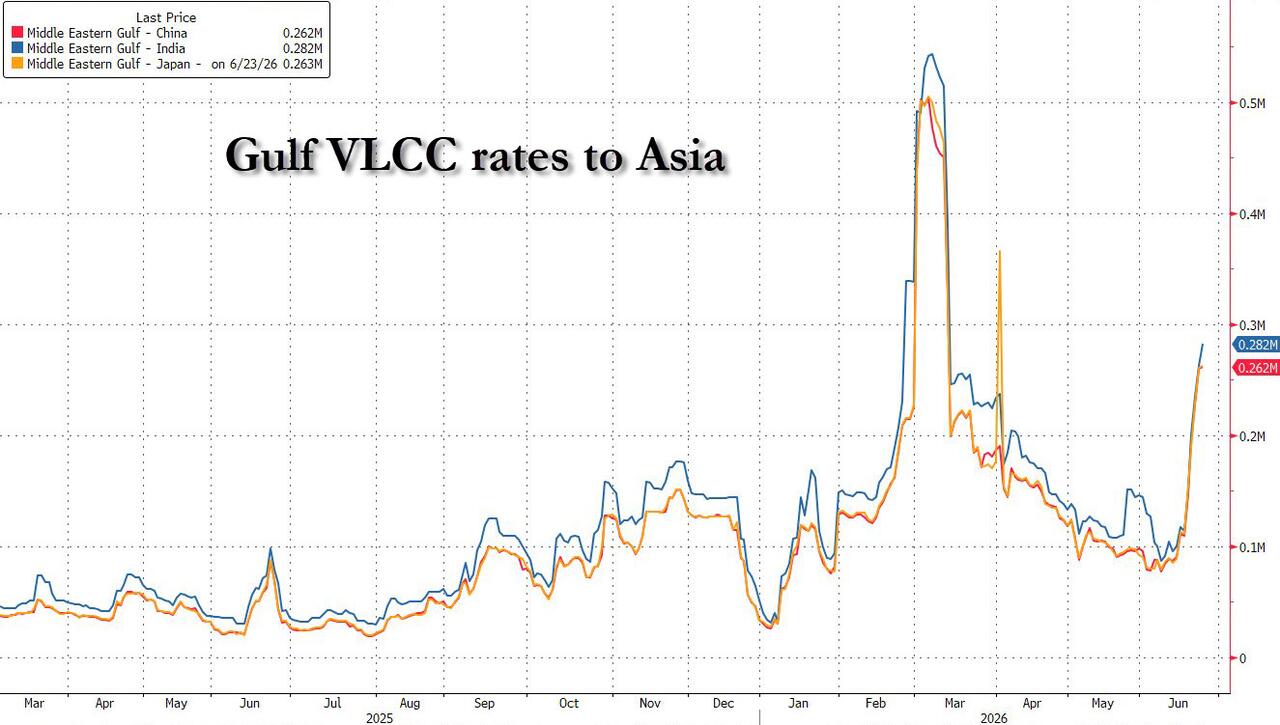
Some in the market are assessing whether storing crude could be an option for the impending wave of supply. Traders said freight costs remain too expensive for floating storage to be effective...
... but countries with sites on land should be able to easily accommodate surplus barrels.
Related Markets
All MarketsMarket data may be delayed. Not financial advice.
How this story developed
Full timelineAlto has tracked this across 3 days of coverage from 1 outlet.
- China's Refiners Slash Runs To Lowest Since 2017, As Asia Refiners Slow Purchases Of Mid-East OilYou are here
Powered by Gab AI
The Story At A Glance
Reading this article now — analysis appears below
💡 AI analysis provides alternative perspectives on current events