Beijing's Trojan Horse Rolls Into Canada: National Security Expert Warns Carney's Chinese EV Deals Embeds Sabotage Risk
The short version
- That is the warning at the center of a report published this week by the Macdonald-Laurier Institute and written by Brenda Shaffer…
- China, she writes, "continues to find creative ways to infiltrate and influence the West ," embedding in its exports the capacity to surveil citizens…
- Shaffer situates the electric-vehicle question inside a wider argument about hybrid warfare .
- China, Russia and Iran, she notes, have each written attacks on Western domestic energy infrastructure into their war doctrines…
- Even brief disruptions to electricity or transit, she argues, could spread public panic and erode support for a distant conflict — the defense of Taiwan being the obvious test.
The story
Submitted by The Bureau's Sam Cooper (emphasis our own),
China keeps finding inventive ways to burrow into the West, and Canada's new appetite for Chinese electric vehicles may be the most consequential opening yet.
That is the warning at the center of a report published this week by the Macdonald-Laurier Institute and written by Brenda Shaffer, an energy and national-security specialist who teaches at the United States Naval Postgraduate School.
China, she writes, "continues to find creative ways to infiltrate and influence the West," embedding in its exports the capacity to surveil citizens, disrupt transportation and ports, and trigger blackouts and grid damage.
Shaffer situates the electric-vehicle question inside a wider argument about hybrid warfare. China, Russia and Iran, she notes, have each written attacks on Western domestic energy infrastructure into their war doctrines, erasing the old line between the home front and the battlefield. Even brief disruptions to electricity or transit, she argues, could spread public panic and erode support for a distant conflict — the defense of Taiwan being the obvious test.
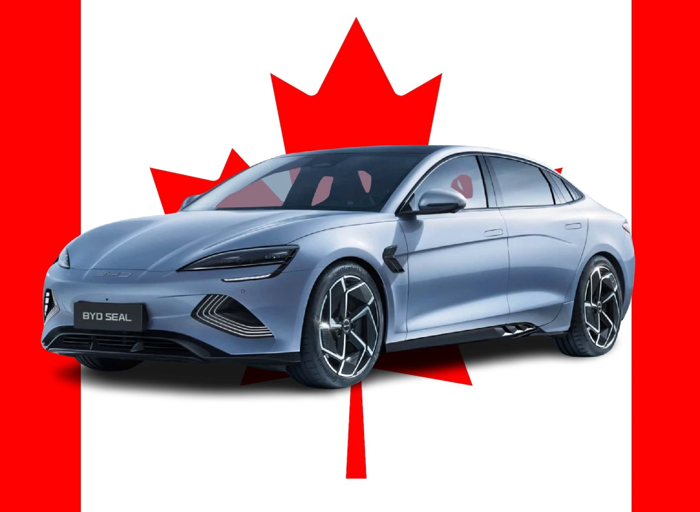
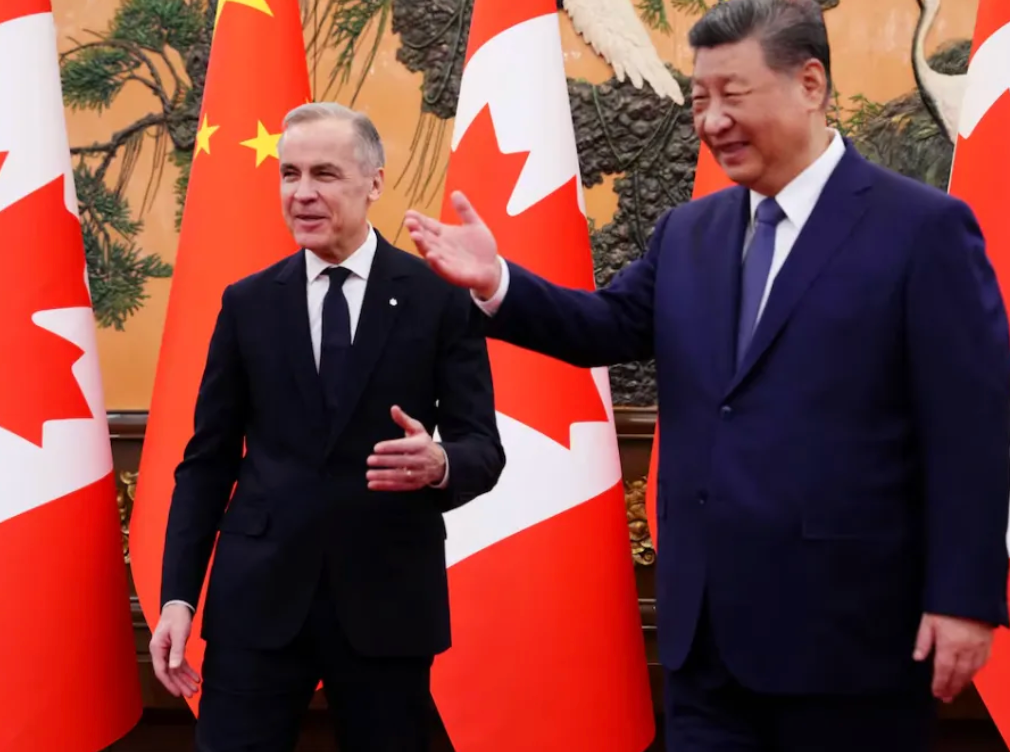
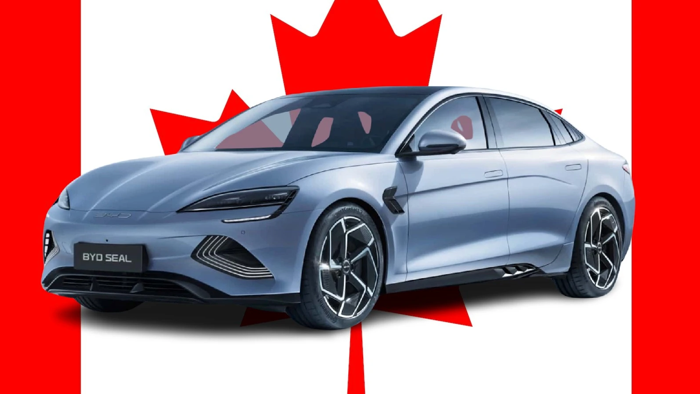
The cars began arriving in June, the product of a strategic partnership Prime Minister Mark Carney signed in Beijing in January. Ottawa cut its tariff on Chinese electric vehicles from 100 percent to 6.1 percent, opening an initial quota of roughly 49,000 vehicles in the first year. Carney has cast the imports as a low-cost route for Canadians switching to electric, and analysts cited by Shaffer expect Chinese brands to capture a fifth of the Canadian market.
Shaffer leans on an internal Public Safety Canada memo, obtained under access-to-information law, warning that opening the market to "high-risk vendors" invites connected cars that "collect significant amounts of data on Canadians, which can have intelligence value." Her account of the official response is withering. Asked how Canada would protect drivers, the chief of the defense staff, General Jennie Carignan, told reporters only that "we don't have a lot of Chinese vehicles so far," and Defense Minister David McGuinty said he would raise the question with base commanders.
The danger, in her telling, runs well past cars.
A congressional probe found hidden communications equipment inside Chinese-made cranes at major American ports; the same cranes are common in Canadian harbors, where Transport Canada began assessing the risk in 2023. More worrying still are solar power inverters — the devices that feed renewable energy into the grid — of which China supplies about 70 percent worldwide. American investigators have identified undeclared communication components inside some Chinese inverters that experts warn could be used to switch them off remotely and destabilize power grids.
Lithuania has banned Chinese inverters outright and the European Union has moved to bar them from public funding, while Canada, Shaffer writes, has imposed no comparable limits — even as the January partnership commits Ottawa and Beijing to deepen cooperation on solar, wind and battery storage.
Conservative Leader Pierre Poilievre's auto policy would prohibit Chinese-made vehicles from proximity to Canadian Forces bases and other sensitive or strategic infrastructure.
In Washington, where opposition to Chinese electric vehicles is one of the few genuinely bipartisan positions, President Donald Trump has called the deal a disaster for Canada, Transportation Secretary Sean Duffy said Canada would live to regret it, and the U.S. ambassador, Peter Hoekstra, vowed the cars would never reach American roads: "We're not going to open the floodgates to have Chinese cars coming into the US from Canada."
Shaffer's alarm is echoed, from a different vantage, by Michael Kovrig, the former Canadian diplomat held in China for more than 1,000 days. In testimony to Parliament this spring, Kovrig described the deal as a "trifecta of risks" — structural dependence, unfair competition that erodes industrial capacity, and systemic pressure on government policy — and warned that the People's Republic "weaponizes technology, supply chains and market access" to force acquiescence to its agenda.
Commenting this week on his own testimony, Kovrig wrote on social media that opening Canada's market to Chinese electric vehicles "should be assessed not as a normal trade agreement, but as a tactical gamble that risks deep entanglement." The Chinese Communist Party, he wrote, "pours enormous resources into the sector to build scale and sustain overcapacity." He went on: "The pattern is to flood, consolidate and weaponize. We've seen China do this before with solar panels, steel, ships and drones, and EVs are now moving through the same stages in global markets."
The warnings have not slowed Carney's government, which is pressing ahead at full speed. Industry Minister Mélanie Joly spent much of last week in China, courting BYD, Chery, Geely and Shanghai Launch Automotive Technology to build electric vehicles on Canadian soil, and confirmed that the import quota will keep climbing — rising by 6.5 percent a year from 49,000 vehicles in 2026 to roughly 67,000 annually by 2031. Carney, caught on a hot microphone with Trump at the Group of Seven summit in France, defended the arrangement as "less than 3 per cent of our market, 49,000 cars," telling the president, "It's a cap, we capped, a hard line."
Beijing is pleased.
Geely Holding Group's Lotus-brand electric vehicles will reach Canada next month — the first such models sold under the 49,000-vehicle quota — China's ambassador to Canada, Wang Di, told Reuters on Friday. The cars would arrive, he said, "and they will be holding a ceremony when the cars are delivered in Montreal," a milestone in the trade pivot Carney has pursued to move Canada away from dependence on the United States.
On June 26, the Chinese Communist Party's state-run China Daily approvingly reported Canada's pledge to lift its exports to China by 50 percent by 2030. At a Canada Day reception at the Canadian embassy in Beijing, the mission's chargé d'affaires, Mark Richardson, called Canada "a stable, reliable partner — a partner that builds and values relationships for the long term," adding, "That includes with China." Of Carney's January visit, he said: "To say this has been a significant year for Canada–China relations would be an understatement. In many ways, it has been a turning point."
He noted that Canada had become a major energy exporter to China and observed that "the first shipment of Chinese-made electric vehicles has arrived in Canada under a new quota that was agreed in January."
Related Markets
All MarketsMarket data may be delayed. Not financial advice.
Powered by Gab AI
The Story At A Glance
Reading this article now — analysis appears below
💡 AI analysis provides alternative perspectives on current events