Heat Dome Halts German Trains After Track Sealant Liquifies
The short version
- The local German outlet Leipziger Zeitung reports that after a week of sweltering temperatures above 30°C, with readings climbing toward 40°C on Saturday…
- The city, located in the eastern German state of Saxony, about 120 miles southwest of Berlin, was forced to suspend tram service after the asphalt–rubber joint sealant around…
- Here's more color from the local outlet: Shortly afterwards, it was the turn of the Leipzig Transport Authority (LVB).
- At several points across the network, trams simply came to a standstill; nothing was working at all.
- One road-sealant spec lists a softening point of 100°C, or about 210°F, while another asphalt–rubber joint sealer has a softening point of 185°F and says the material is heated to…
The story
Europe's heat wave is now quickly morphing from a public health crisis into an infrastructure nightmare, with power prices surging, more than 1,000 excess deaths reported across France, and extreme temperatures bringing parts of Germany's rail infrastructure to a halt.
The local German outlet Leipziger Zeitung reports that after a week of sweltering temperatures above 30°C, with readings climbing toward 40°C on Saturday, critical transport infrastructure in Leipzig failed under the heat.
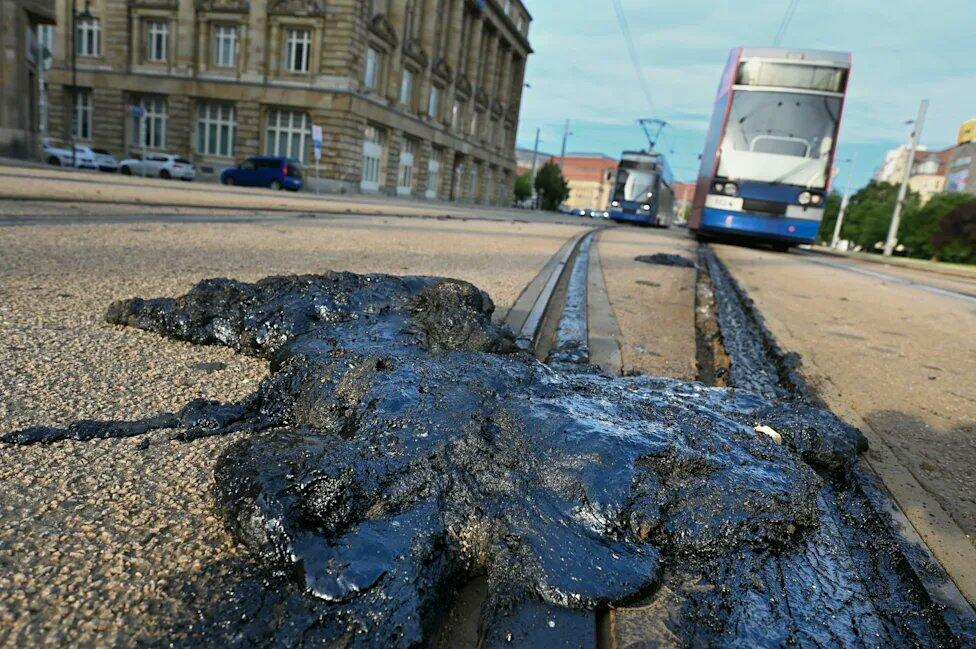
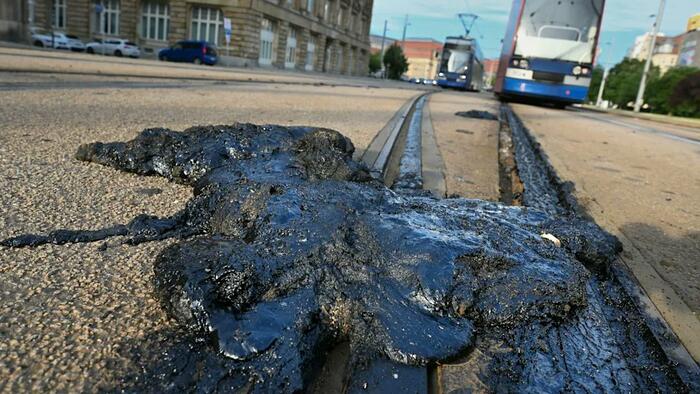
The city, located in the eastern German state of Saxony, about 120 miles southwest of Berlin, was forced to suspend tram service after the asphalt–rubber joint sealant around embedded tracks softened and liquefied.
Here's more color from the local outlet:
Shortly afterwards, it was the turn of the Leipzig Transport Authority (LVB). At several points across the network, trams simply came to a standstill; nothing was working at all. Finally, on Saturday afternoon, the LVB announced the suspension of all scheduled tram services: "The joint sealant between the tracks and the tarmac has become liquid and, in some places, has clumped together," confirmed a representative for the Leipzig Group, to which the LVB belongs, in response to an inquiry from the LZ in the early evening.
One road-sealant spec lists a softening point of 100°C, or about 210°F, while another asphalt–rubber joint sealer has a softening point of 185°F and says the material is heated to 300°F to 350°F for application. That means that on a 40°C day, dark asphalt and rail beds accumulated enough heat to fall within the range noted above for liquefaction.
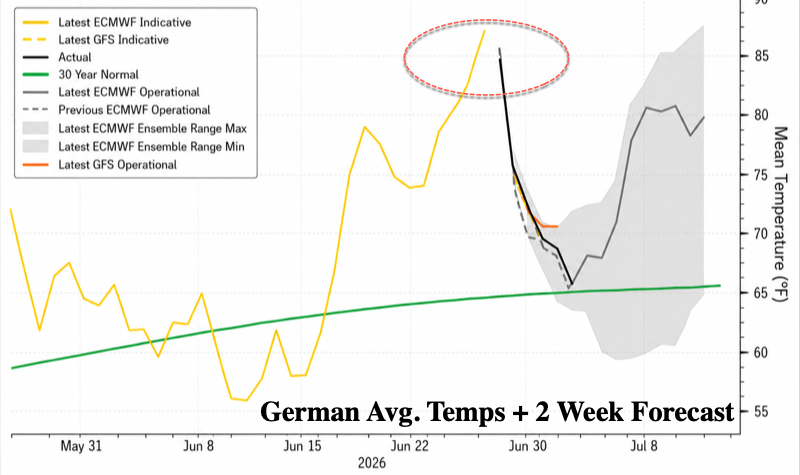
Bloomberg data shows relief coming for Germany after a week and a half of sweltering temperatures...
The effects of the weather phenomenon El Niño are likely to push average global temperatures to elevated levels in both 2026 and 2027.
Latest El Niño coverage:
- Super El Nino: Famine Follows War?
- Trader's Guide To Navigating The "Super El Niño"
- UBS Warns El Nino May Intensify Food Inflation Across Asia
Welcome to near the peak of Northern Hemisphere summer.
Related Markets
All MarketsMarket data may be delayed. Not financial advice.
Powered by Gab AI
The Story At A Glance
Reading this article now — analysis appears below
💡 AI analysis provides alternative perspectives on current events