Chinese AI Matches Mythos In Cybersecurity Tasks With Open-Weight Model
The short version
- The company, Zhipu AI - also known as Z.ai, can match the latest US models when it comes to finding security bugs - though it still lags at other tasks…
- Overall, the capability gap between top U.S. models and those built by Chinese companies has narrowed significantly…
- A host of companies, including Microsoft, are weighing how they can offer Chinese models on their platforms , a development that is set to alter the balance of power among tech…
- What's more, Zhipu's GLM-5.2 is an open-weight model, meaning it can be downloaded and run on hardware by anyone and can be modified and used without supervision - which hackers…
- GLM-5.2 has ranked as one of the 10 most-used AI models , according to data from OpenRouter, a company that provides access to more than 400 AI models.
The story
While Anthropic has been forced to shut down its latest general-use models for over two weeks after it emerged that the company's de-tuned public-facing Fable 5 model could be 'jailbroken' into its unrestricted form (Mythos 5) to perform tasks that pose security risks, a Chinese AI company backed by Alibaba and Tencent has released a model that matches the performance of Mythos in some cybersecurity scenarios.
The company, Zhipu AI - also known as Z.ai, can match the latest US models when it comes to finding security bugs - though it still lags at other tasks, according to the Wall Street Journal.
Overall, the capability gap between top U.S. models and those built by Chinese companies has narrowed significantly, and use of Chinese AI systems has surged as businesses seek to rein in runaway costs. A host of companies, including Microsoft, are weighing how they can offer Chinese models on their platforms, a development that is set to alter the balance of power among tech companies.
What's more, Zhipu's GLM-5.2 is an open-weight model, meaning it can be downloaded and run on hardware by anyone and can be modified and used without supervision - which hackers are undoubtedly loving.
GLM-5.2 has ranked as one of the 10 most-used AI models, according to data from OpenRouter, a company that provides access to more than 400 AI models. In some benchmarking tests, according to the cybersecurity company Semgrep, GLM-5.2 bested Anthropic’s Claude Opus 4.8 model, which was released in May. When given further instructions, Opus 4.8 and GLM-5.2 can match Mythos in bug-finding ability, according to researchers.
As we noted last week for our premium subscribers, this is how Goldman's Delta One head, Rich Privorotsky framed the latest Chinese shock to the system from open-weight models:
The big development over the last couple of days has been GLM-5.2, another Chinese open source model that appears highly competitive on SWE benchmarks relative to some of the latest private models. It is not quite cutting edge, but the gap between open and closed models continues to narrow. The weights are open (MIT license), models can be distilled, quantized and reproduced...its a big leap in capability and a clear sign the field is narrowing.
It's not just some of Wall Street's top thinkers who were immediately drawn to the stats of the latest Chinese offering: various industry insiders were in shock.
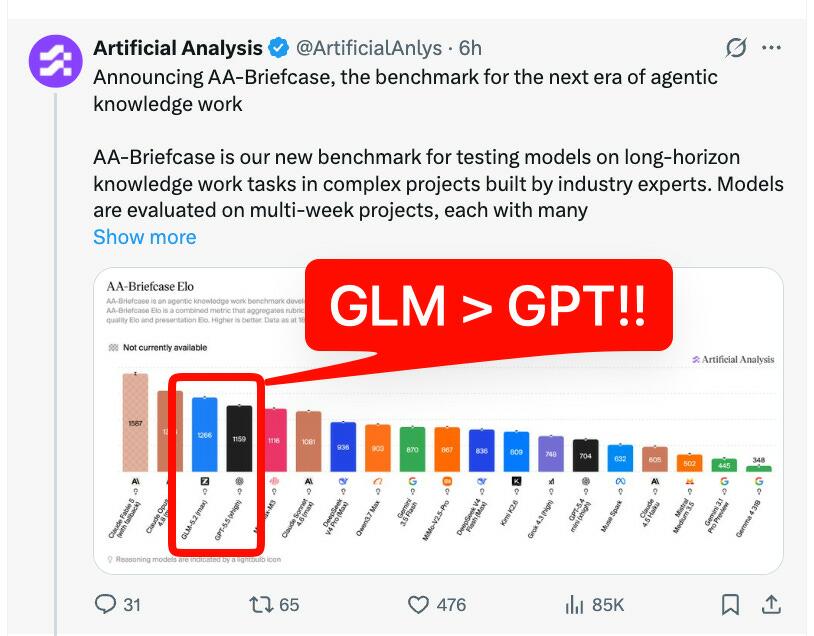
Artificial Analysis’ new knowledge work benchmark rated it higher than GPT 5.5
"This kind of powerful weapon that can alter the landscape of cyberwarfare can’t remain solely in American hands," Zhou Hongyi - CEO of Chinese cybersecurity company 360 Security Technology, speaking at a cybersecurity conference in Beijing. His company has released a new bug-finding tool called Tulongfeng - which it claims is comparable to Mythos when it comes to finding bugs.
So while the Trump administration restored some access to Mythos 5, IT departments across America are now at a disadvantage when it comes to using something this powerful to find and patch their own vulnerabilities.
"Banning Fable while selling chips China needs to develop its own version is a gift to China," said Saif Khan - a distinguished technology fellow at the Institute for Progress think tank who focused on export restrictions under the Biden administration. Kahn says that the US needs to maximize the use of Mythos and similar models to harden cyber defenses while it can.
Among the Mythos 5 and Fable 5 users that had lost access before Friday’s decision to restore Mythos 5 access for some trusted entities: the National Security Agency, which had been testing the tools and found them impressive in trials, according to people familiar with the matter.
Critics of the White House approach have said it has been lax in restricting use of Chinese open-weight models from companies such as DeepSeek and Zhipu, which are popular among U.S. businesses. -WSJ
Meanwhile - OpenAI on Friday said it will now limit access to its latest model - GPT 5.6, after Trump administration officials raised security concerns. The company warned that the government's current case-by-case evaluation process isn't a good long-term solution, but they're adhering to it following a recent executive order focused on security and model oversight.
In short, the Trump administration is driving people to use open-weight Chinese models, while hobbling the US AI industry.
Related Markets
All MarketsMarket data may be delayed. Not financial advice.
How other outlets covered this
Compare allAlto found this story at 2 outlets. Same event, different framing — compare the headlines.
How this story developed
Full timelineAlto has tracked this across 2 days of coverage from 2 outlets.
- Chinese AI Matches Mythos In Cybersecurity Tasks With Open-Weight ModelYou are here
Powered by Gab AI
The Story At A Glance
Reading this article now — analysis appears below
💡 AI analysis provides alternative perspectives on current events