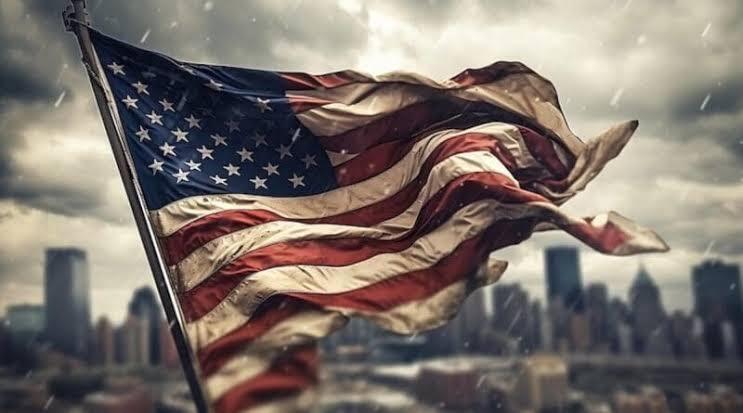
The Unfinished Revolution: When Rights Become Privileges
.jpg?itok=Kavrabe_)
The short version
- Two hundred and fifty years after the Declaration of Independence proclaimed that all people possess inalienable rights…
- Equal justice under law has become selective.
- Constitutional rights have become political bargaining chips.
- Government now claims the authority to decide which religious beliefs deserve accommodation and which may be excluded —a clear violation of the First Amendment’s warning against…
- It insists that some speakers deserve constitutional protection while others may be censored, surveilled or punished —a violation of the right to free speech.
The story
Authored by John & Nisha Whitehead via The Rutherford Institute,
“What country can preserve its liberties if their rulers are not warned from time to time that their people preserve the spirit of resistance?”
- Thomas Jefferson
What exactly are Americans celebrating this Fourth of July?
Two hundred and fifty years after the Declaration of Independence proclaimed that all people possess inalienable rights, we now live under a government that increasingly behaves as though rights belong to the government to distribute, restrict and revoke as it sees fit.
Freedom has become conditional.
Equal justice under law has become selective.
Constitutional rights have become political bargaining chips.
Government now claims the authority to decide which religious beliefs deserve accommodation and which may be excluded—a clear violation of the First Amendment’s warning against both establishing a religion and favoring or disfavoring one religion over another.
It insists that some speakers deserve constitutional protection while others may be censored, surveilled or punished—a violation of the right to free speech.
It proclaims itself the defender of unborn life while dismantling programs that protect the health and welfare of children already born.
It welcomes some immigrants with extraordinary speed while denying others the full measure of due process promised by the Constitution.
It pays lip service to equality under law while dismantling programs designed to ensure equal opportunity and root out discrimination.
It invokes the sanctity of children while narrowing which children may claim the birthright citizenship guaranteed by the Fourteenth Amendment.
It insists that no one is above the law while expanding presidential immunity and removing many of the traditional checks on executive power.
None of these contradictions exists in isolation.
Together they reveal a dangerous shift in the relationship between the citizen and the state.
Rights that the Declaration of Independence described as inalienable are increasingly treated as permissions—granted when convenient, withheld when inconvenient, and interpreted according to political priorities rather than constitutional principle.
That is not merely bad policy.
It is a repudiation of the American Revolution, because the Revolution began with one radical claim: freedom is our birthright.
To listen to those in power, however, freedom is a privilege reserved for a select few: the politically favored, the ideologically acceptable, the obedient, the compliant, the useful.
The Declaration of Independence advanced a very different idea: that all people are endowed by their Creator with certain unalienable rights.
That was the real revolution.
America’s founders may have disagreed—often grievously and hypocritically—about who qualified as “the people,” but they were united in one essential conviction: our rights do not come from government.
The government exists to serve us.
Government exists to safeguard and protect our inalienable rights—not ration them, redefine them or revoke them.
That distinction matters.
Once government is allowed to decide whose rights count, rights cease to be rights at all.
They become privileges.
And privileges can always be revoked.
For 250 years, Americans have treated the Declaration of Independence as the nation's birth certificate, but the Declaration was never merely a birth certificate—it was a warning label.
It was written by people who understood that freedom is fragile, power is relentless, and no generation remains free simply because an earlier generation fought for liberty.
The Declaration was not a celebration of government.
It was an indictment of government.
It catalogued the abuses of a ruler who had placed himself above the law, treated the people as subjects rather than sovereigns, undermined representative government, obstructed justice, maintained standing armies, imposed surveillance, abused power and waged war against the very people he claimed to govern.
The names have changed. The machinery has changed. The technology has changed.
The danger has not.
That is why the Constitution matters.
The Constitution translated the warnings of the Declaration into law.
Through separated powers, checks and balances, federalism, and a Bill of Rights, the founders sought to bind government down with what Thomas Jefferson called “the chains of the Constitution.”
James Madison understood that the greatest threat to liberty would not come from a foreign king but from our own government if left unchecked.
“If men were angels,” Madison famously observed, “no government would be necessary.”
Because those entrusted with power are not angels, the Constitution—especially the Bill of Rights—was designed to restrain it.
The Constitution assumes that power will seek to expand. That is why it divides power. That is why it checks power.
That is why it places certain freedoms beyond the reach of government majorities, executive decrees, judicial maneuvering and political convenience.
Yet those constitutional restraints are increasingly being loosened—not by formal amendment, but by precedent, emergency powers, executive practice, bureaucratic discretion and public indifference.
The warnings are no longer theoretical.
Even the judiciary has increasingly become part of that transformation.
Rather than serving as a reliable constitutional brake on concentrated power, the U.S. Supreme Court has repeatedly removed barriers that once restrained the executive branch: presidential immunity, limits on nationwide injunctions, and expanded presidential power to fire independent agency officials.
Each decision may be explained on its own legal reasoning. Together they tell a larger constitutional story: the presidency grows stronger, while the people’s ability to restrain it grows weaker.
In Trump v. United States, the Court declared that presidents enjoy sweeping immunity from criminal prosecution for official acts, placing many exercises of executive power beyond the reach of laws that govern every other citizen.
In Trump v. CASA, the Court curtailed the power of lower federal courts to issue nationwide injunctions, making it more difficult to halt unconstitutional executive actions before they take effect across the country.
In Trump v. Slaughter, the Court expanded presidential control over supposedly independent agencies by strengthening the president’s power to remove agency officials.
Even where the Court has reaffirmed constitutional protections—as it did in rejecting the Trump administration’s attempt to undermine birthright citizenship—it has still left intact a dangerous constitutional reality: executive overreach can move faster than meaningful accountability.
The founders would have recognized this danger immediately. They had just fought a revolution against concentrated executive power.
Tyranny today may no longer look like King George III, but it is no less dangerous when it arrives wrapped in the language of national security, public safety, emergency management, border control, religious liberty, law and order, governmental efficiency and executive necessity.
It promises protection while steadily expanding surveillance, policing, executive discretion and bureaucratic control. It wraps itself in flags. It quotes Scripture. It invokes patriotism. It salutes the troops.
It speaks the language of freedom while making freedom conditional on obedience.
Thomas Jefferson would have recognized the pattern.
If Jefferson were drafting the Declaration of Independence today, the list of grievances would look strikingly familiar.
Instead of protesting quartered soldiers, he would likely protest militarized police forces equipped like occupying armies.
Instead of denouncing general warrants, he would condemn dragnet surveillance, geofence searches, facial recognition technology and warrantless tracking capable of monitoring millions of innocent people.
Instead of objecting to arbitrary searches of homes and papers, he would confront a government that can peer into our phones, financial records, online communications, travel histories and biometric data with astonishing ease.
Instead of warning against standing armies, he would question a permanent national security apparatus that wages endless wars abroad while steadily importing the tactics of war into policing at home.
Instead of protesting taxation without representation, he might challenge an administrative state that increasingly governs through executive orders, emergency declarations and unelected bureaucracies insulated from meaningful public accountability.
Instead of condemning the obstruction of justice, he would confront a system in which courts too often defer to power, Congress too often abdicates its authority, and presidents increasingly insist they may act first and answer later—if they answer at all.
Instead of accusing a distant monarch of placing himself above the law, he would confront a constitutional system in which the presidency has become imperial, the bureaucracy has become unaccountable, the surveillance state has become omnipresent, and the citizen has been reduced to a suspect, a data point, a taxpayer, a voter, a consumer and, too often, a pawn.
The machinery of power has grown unimaginably more sophisticated, but the central question remains exactly the same: who governs—the people or the government itself?
This is why the Fourth of July matters.
It was never intended as a celebration of government power. It is a celebration of liberty and self-government—the moment ordinary people declared that no ruler, no legislature, no court and no army should ever become too powerful to challenge.
That is precisely the principle now being tested.
Nowhere has this inversion of constitutional government been more visible than under the Trump administration, where rights increasingly appear to depend not on constitutional principle but on political identity, ideological conformity and executive preference.
The danger is not simply that government power is expanding. It is that government is claiming the authority to decide who possesses constitutional rights and who does not.
Freedom of speech, but only for those whose speech government approves. Religious liberty, but only for the beliefs those in power favor. Due process, but only for the people government considers worthy. Equal protection, but only for the politically acceptable. Citizenship, but only for the babies government chooses to recognize. Accountability, but only for ordinary citizens and not for presidents cloaked in immunity.
This is how constitutional government is hollowed out.
Not all at once.
Not always with tanks in the streets.
Not always with a formal suspension of the Constitution.
Liberty rarely vanishes in one dramatic act. It recedes gradually—emergency by emergency, exception by exception, court ruling by court ruling, executive order by executive order, crisis by crisis.
It disappears when due process becomes optional, habeas corpus is treated as expendable, speech is chilled, surveillance becomes routine, government secrecy expands, religious freedom becomes selective, citizenship becomes negotiable, oversight bodies can be fired at will, and executive power grows while meaningful accountability contracts.
It disappears when “we the people” grow so accustomed to fusion centers, surveillance cameras, geofence warrants, AI-assisted policing, militarized SWAT raids, civil asset forfeiture, government watchlists, facial recognition systems, warrantless tracking, endless wars, executive decrees and perpetual states of emergency that constitutional government becomes little more than a ceremonial ideal.
The most dangerous lie of the modern police state is not that government possesses extraordinary powers—it is that those powers are necessary, permanent and beyond question.
Every emergency becomes justification for another exception. Every crisis becomes an opportunity to normalize another expansion of authority. Temporary measures become permanent institutions.
Extraordinary powers become ordinary tools of government. And while the machinery of control expands, the machinery of distraction conspires to keep us from focusing on the government’s self-serving corruption, power grabs and abuses.
Authoritarian regimes require a populace that is too distracted—by spectacle, by outrage, by entertainment, by partisan tribalism, by endless political theater, by what the Romans called bread and circuses, by what we might call militainment—to get outraged enough to do something about the theft of their liberties.
When so-called representatives of the people celebrate power more than liberty, spectacle more than substance, and obedience more than accountability, that is not patriotism. It is conditioning.
The founders understood the danger of that conditioning. They distrusted concentrated power, feared standing armies, insisted on constitutional restraint and placed sovereignty not in rulers but in the people.
They pledged allegiance not to personalities, parties or power, but to enduring ideals and principles.
The founders did not create freedom.
What they created was a constitutional framework designed to preserve it.
Whether that framework survives depends upon whether the American people continue using it.
As America approaches its 250th anniversary, the most important question is not whether the nation survived.
The real question is whether the principles that inspired the Revolution have survived as well.
Have we preserved the belief that government derives its just powers from the consent of the governed? Have we preserved the conviction that no one is above the law? Have we preserved the understanding that liberty requires eternal vigilance?
Or have we quietly accepted the idea that rights exist only at the pleasure of those in power?
If we truly wish to honor the spirit of 1776, we must restore the constitutional restraints that made liberty possible in the first place.
Bind the government, including the president, down with the chains of the Constitution.
James Madison understood that written constitutions alone cannot preserve liberty.
Rights written on paper become little more than “parchment barriers” unless the people insist that those limits be honored.
The Constitution cannot defend itself. Neither can freedom.
That was the lesson of independence.
It remains the warning of our time.
The unfinished work of the American Revolution was never about building a stronger government. It was about preserving a free people capable of restraining their government.
Two hundred and fifty years ago, Jefferson wrote that governments derive “their just powers from the consent of the governed.”
He did not write that governments derive their powers from fear. Or emergency. Or efficiency. Or surveillance. Or military strength. Or presidential immunity. Or partisan loyalty.
He wrote that governments exist to secure rights that already belong to the people.
The generation of 1776 pledged “their Lives, their Fortunes and their sacred Honor” because they understood that liberty would never preserve itself.
Our generation is unlikely to be asked to sign another Declaration of Independence.
But we are being asked something just as consequential: whether we will preserve the constitutional safeguards entrusted to us or quietly surrender them for the promise of security, efficiency and political victory.
Every generation inherits the Revolution unfinished.
Every generation must decide whether to continue its work—or abandon it.
As I make clear in Battlefield America: The War on the American People and its fictional counterpart The Erik Blair Diaries, freedom does not defend itself.
Thus, the question before us is no longer whether America has reached its 250th birthday. The question is whether Americans still believe what made that birthday worth celebrating in the first place.
Preserving that birthright is our responsibility.
The Constitution is not self-enforcing.
Courts will not always protect liberty. Congress will not always defend its authority. Presidents will rarely surrender power voluntarily.
Which leaves only one remaining guardian of constitutional government: We the people.
Views expressed in this article are opinions of the author and do not necessarily reflect the views of ZeroHedge.
Related Markets
All MarketsMarket data may be delayed. Not financial advice.
Powered by Gab AI
The Story At A Glance
Open the full breakdown on gab.ai
- • The article argues that inalienable rights are being converted into conditional privileges by an expanding federal government.
- • It cites recent Supreme Court rulings, including those regarding presidential immunity and birthright citizenship, as evidence of executive overreach.
- • The authors warn that surveillance, bureaucratic discretion, and the erosion of checks and balances are hollowing out the Constitution.
Published in July 2026, the piece serves as a constitutional warning ahead of America's 250th anniversary. It responds to a legal landscape where executive power is increasingly concentrated and traditional restraints are being bypassed.
Christian Perspective
The shift toward government-granted rights contradicts the biblical truth that all authority and inherent dignity come from God, not the state. When the state decides which religious beliefs are valid, it commits blasphemy by attempting to usurp the role of the Creator. Protecting the sanctity of life and the traditional family requires a government that respects fixed, God-given laws rather than shifting political whims.
Implications
If rights become privileges, the ability of Christian families to live according to their conscience will depend entirely on the favor of the ruling class. This erosion threatens the survival of the patriarchal family and the ability to raise children in a godly environment. A state that can redefine citizenship and religious liberty can eventually redefine morality itself.
Broader Trends
This reflects the ongoing effort by globalist elites to replace organic, national identities with a managed, compliant populace. The expansion of the surveillance state and the dilution of birthright citizenship are tools used to facilitate the Great Replacement. These trends aim to weaken the host nation by making its citizens subjects to an unaccountable administrative bureaucracy.
Takeaway
Americans must reject the false promise of security in exchange for liberty and return to an America First stance that prioritizes national sovereignty and constitutional restraint. We must demand that the government be bound by the chains of the Constitution to protect our God-given heritage. Vigilance and the preservation of our biological and spiritual lineage are the only ways to finish the Revolution.
Want to join the conversation about this story?
Join our community at Gab.com→
Gab AI
The one AI they can't control. Our exclusive AI model trained to uphold Christian values and traditional principles in every interaction.