"Deepening Dark Trend" Emerges On Hormuz As Ship Traffic Slows
The short version
- While our overnight wrap focused on the latest war developments, the focus here is what energy traders are watching most closely: vessel traffic through the Strait of Hormuz.
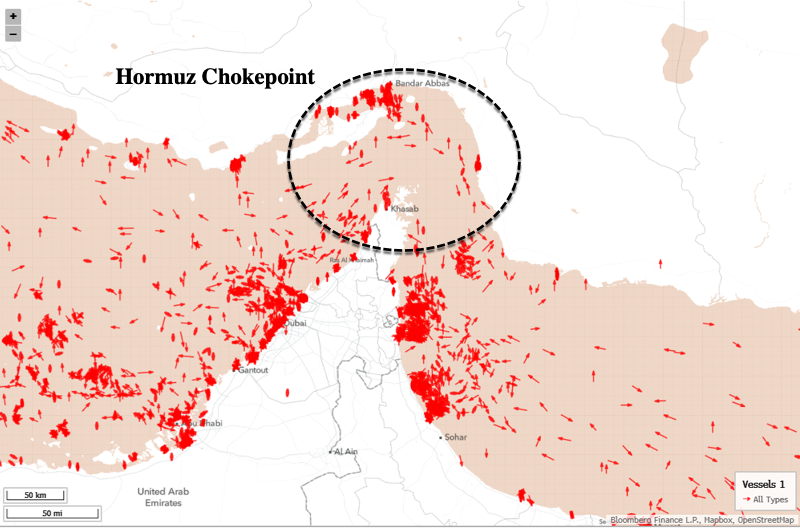
- Bloomberg cites new shipping data showing that the Hormuz chokepoint slowed to a near standstill on Thursday.
- More color from the report: Among larger vessels, only a US-sanctioned supertanker heading out of the Persian Gulf was seen in the strait…
- It's possible that some vessels may be crossing with their transponders turned off, however.
- The slowdown marks a sharp reversal from the partial recovery that followed the mid-June interim US-Iran peace deal to reopen the Strait of Hormuz.
The story
The US military has struck Iranian targets for a second straight day, while Tehran has responded with ballistic missile and drone attacks targeting Kuwait, Qatar, Bahrain and even faraway Jordan. While our overnight wrap focused on the latest war developments, the focus here is what energy traders are watching most closely: vessel traffic through the Strait of Hormuz.
Bloomberg cites new shipping data showing that the Hormuz chokepoint slowed to a near standstill on Thursday.
More color from the report:
Among larger vessels, only a US-sanctioned supertanker heading out of the Persian Gulf was seen in the strait, alongside an Iranian-flagged container ship. It's possible that some vessels may be crossing with their transponders turned off, however.
The slowdown marks a sharp reversal from the partial recovery that followed the mid-June interim US-Iran peace deal to reopen the Strait of Hormuz.
Commodity-vessel transits averaged 34 a day over the past three weeks and peaked at 59 on June 24, according to Kpler data. That compares with just 14 crossings Wednesday, the lowest since the deal and near wartime levels.
Maritime research firm Windward also commented on the Hormuz slowdown:
Additional overnight signal: one inbound vessel made a sharp U-turn near the strait entrance off Khasab. Watching for what happens next. pic.twitter.com/uGefTl5cG7
— Windward (@WindwardAI) July 9, 2026
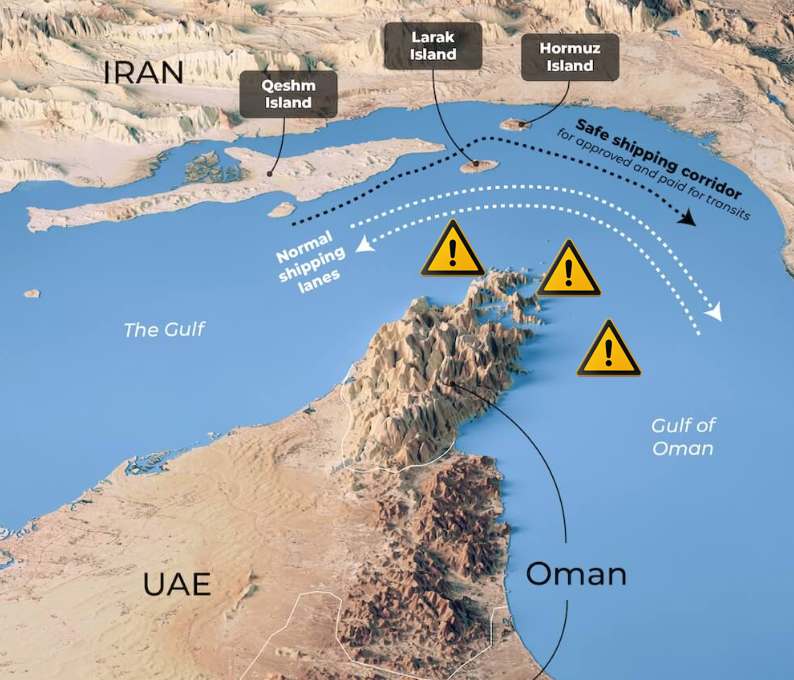
Earlier, Islamic Revolutionary Guard Corps Navy Command stated that it has taken control of managing security and vessel routing through the Hormuz chokepoint.
Here's the translated statement:
Islamic Revolutionary Guard Corps Navy Command
In the name of God, the Most Compassionate, the Most Merciful.
Peace be upon the insightful and honorable nation, whose astonishing presence and tens-of-millions-strong funeral processions for their martyred leader in Iran and Iraq showed that this is the era of the end of the bullying of powers, and the century of the triumph of nations' will.
And peace be upon the brave warriors of Islam, who, with their crushing response to the aggressions of the child-killing American army, proved that the outcome of battle is determined not by the abundance of weapons, but by the power of faith.
These warriors, by stabilizing management of the Strait of Hormuz, establishing its security over the past two weeks, and gradually reopening it, have increased passage capacity to about 50% of prewar traffic. They are also increasing the transit capacity of vessels that, while observing the security regulations with discipline, obtain permission from the IRGC Navy to pass through the routes designated by the Islamic Republic.
Once again, we declare that foreigners have no stake in this land or in the Strait of Hormuz. The adventurism of the terrorist American army and its interference in determining traffic routes will not only bring our crushing response, but will also seriously disrupt the process of gradual reopening and seriously endanger the interests of countries that benefit from the Strait of Hormuz.
🇮🇷 The IRGC Navy issued a statement declaring that Iran has established control over the Strait of Hormuz.
— Mario Nawfal (@MarioNawfal) July 9, 2026
It stated that shipping traffic has gradually increased to nearly 50% of pre-war levels, and warned that any foreign interference or attempts to dictate shipping routes… pic.twitter.com/0fKkz9vqmW
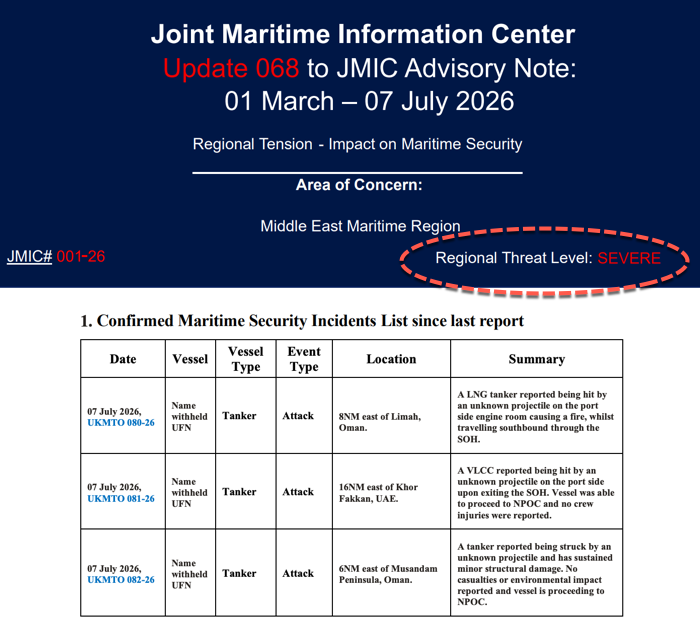
On Tuesday, following three separate Iranian attacks on commercial vessels, the Joint Maritime Information Center raised the threat level of the Hormuz chokepoint to "severe."
The unwinding of diplomatic efforts will complicate the normalization process of reopening the Hormuz.
Goldman analyst Chris Hussey commented on this:
Hormuz recovery stalls. Oil has rebounded as renewed fighting around the Strait of Hormuz has interrupted the post-reopening recovery in Persian Gulf flows, while refined products markets remain even tighter than crude, writes Yulia Grigsby in "Oil Tracker: Negative Supply News From Gulf and Russia." Persian Gulf oil flows initially recovered to above 80% of pre-war levels after reopening, but recent tanker attacks pushed them back to the low-70% range, with exports through Hormuz falling from about 10 mb/d to 8.3 mb/d on a 7-day average basis. This supports our view that the key constraint is now Iran's willingness to allow flows, not tanker capacity.
Polymarket:
Brent crude futures were trading around $79 a barrel early Thursday, while WTI hovered near $74, signaling that traders were pricing in renewed geopolitical war risk premium as Hormuz vessel traffic slowed and the US-Iran conflict flared up.
Related Markets
All MarketsMarket data may be delayed. Not financial advice.
Powered by Gab AI
The Story At A Glance
Reading this article now — analysis appears below
💡 AI analysis provides alternative perspectives on current events