Israeli Officials Try To Push US Refueling Tankers Out Of Ben Gurion Airport Amid Disruptions
The short version
- Reports also say it has cost the airport hundreds of millions of dollars at this point.
- Regev specifically addressed the domestic public's concerns over air travel.
- "Hundreds of thousands of plane tickets were bought by Israelis to fly and enjoy their summer vacation," the official said.
- "We promised that we will enable commercial flights and we will not cancel a single ticket because of American refueling planes .
- The monthslong presence of US military aircraft at Ben Gurion Airport amid the Iran war has been preventing a full return to normal commercial flight operations…
The story
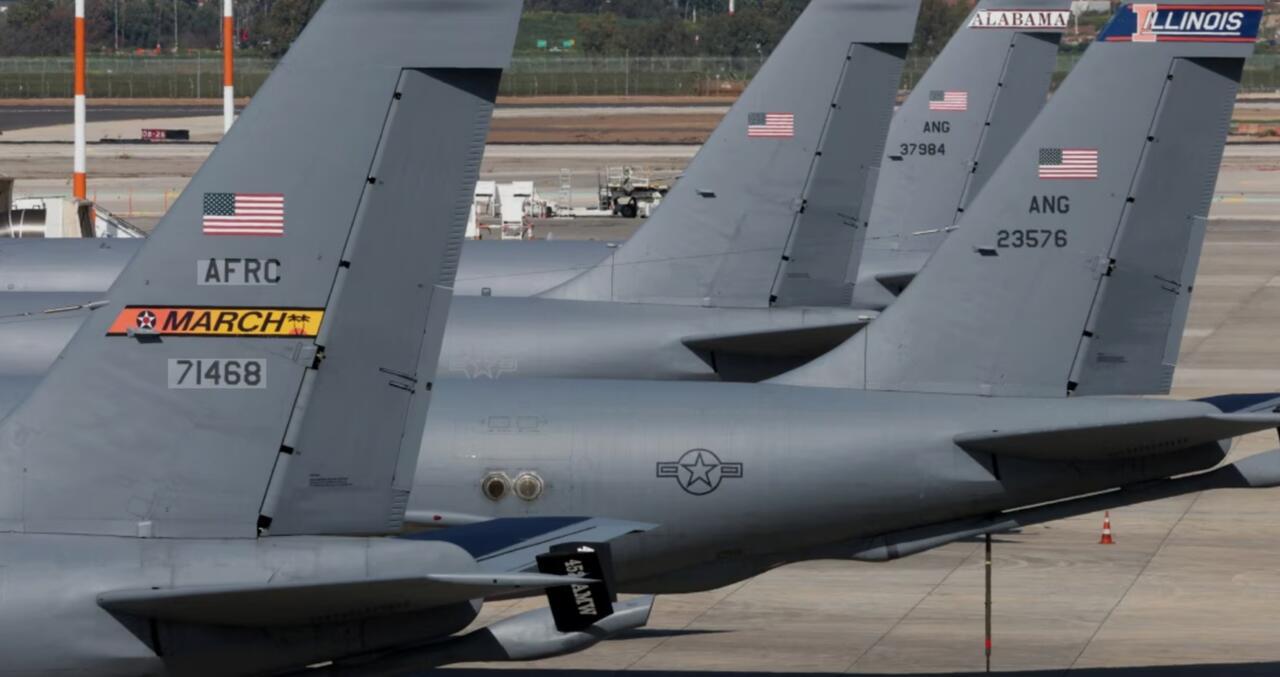
Immense controversy has remained centered on Ben Gurion International Airport as dozens of giant US Air Force refueling tankers have essentially taken over the main Israeli flight hub for many months, since the start of Trump's Operation Epic Fury. Reports also say it has cost the airport hundreds of millions of dollars at this point.
The Israeli government itself seems to be divided, and there's been outrage among the general public as the presence of the American tankers has blocked and slowed regular commercial flights, leading to the recent cancelations of many passengers' tickets, but with an expected tens of thousands more cancelations to come.
On Tuesday the simmering controversy erupted again, and has even raised the possibility of introducing fresh tensions with Washington, after Israeli Transportation Minister Miri Regev announced that the government will not allow more than 20 US refueling tankers to be parked at Tel Aviv’s Ben Gurion Airport at any given time.
Regev specifically addressed the domestic public's concerns over air travel. "Hundreds of thousands of plane tickets were bought by Israelis to fly and enjoy their summer vacation," the official said. "We promised that we will enable commercial flights and we will not cancel a single ticket because of American refueling planes."
Haaretz had already by June tallied that "Some 75 U.S. refueling planes occupy more than half of Ben-Gurion Airport's parking spots and fill up takeoff and landing slots" and cites airport officials who warn: "For lack of a solution, 1.5 million passengers may have their flights canceled this summer."
"Therefore I have given instructions that we will not allow any US refueling tankers to land at Ben Gurion Airport beyond the agreed number of 20 planes and the remaining planes will land at Air Force bases," Regev adds.
Israeli media notes that the crisis has been building:
The directive comes after the Israel Airports Authority warned that unless more US aircraft are removed from the country’s main international air gateway, as many as 50,000 flight tickets could be at risk of cancellation in the coming weeks.
The monthslong presence of US military aircraft at Ben Gurion Airport amid the Iran war has been preventing a full return to normal commercial flight operations, while also driving up operational costs for local airlines.
It's a deep irony that Israelis are increasingly complaining the United States military has effectively taken over Israel's international travel hub.
Media reports have been going so far as to call Tel Aviv's Ben Gurion Airport a "US military base" - as the prominent local newspaper Haaretz does:
The US refueling aircraft and other military assets, which have been stationed at Tel Aviv’s Ben Gurion Airport for months, are causing congestion and may result in flight cancellations, Israeli officials and media reports have said, calling the facility a "US military base."
That prior report complained that "U.S. Air Force refueling aircraft have been stationed at Ben Gurion International Airport for three months, occupying parking spots, taking up takeoff and landing slots and worsening congestion at Israel's main international gateway since the war with Iran erupted in late February, officials say."
Again, a central irony here is that it has largely been US military assets protecting Israel the whole time, going all the way back from last year's June war, from Iranian ballistic missile and drone attacks.
The U.S. has reportedly paused the withdrawal of its aerial refueling aircraft from Tel Aviv's Ben Gurion Airport as tensions with Iran continue to escalate.
— OSINTdefender (@sentdefender) July 14, 2026
The Times of Israel, citing the Israel Airports Authority, reports that the tankers continue to occupy parking space… pic.twitter.com/ag8FY7ETET
The Netanyahu government is perceived by many to be a prime reason the US and Iran are at war in the first place, and so the Pentagon might argue that it's only fair that Israel host its large fleet of military planes and refueling aircraft.
Iran's large retaliatory strikes on US airbases in the Gulf region during the opening weeks of the conflict essentially forced the Pentagon to move its expensive, large aerial assets much further back from the front lines of the war. Previously several parked tankers at Gulf facilities were destroyed or damaged.
It still remains unclear whether the Transportation Minister's directive is approved by Netanyahu's office. Likely all it will take is one angry phone call from President Trump and the order could be reversed.
Related Markets
All MarketsMarket data may be delayed. Not financial advice.
Powered by Gab AI
The Story At A Glance
Reading this article now — analysis appears below
💡 AI analysis provides alternative perspectives on current events