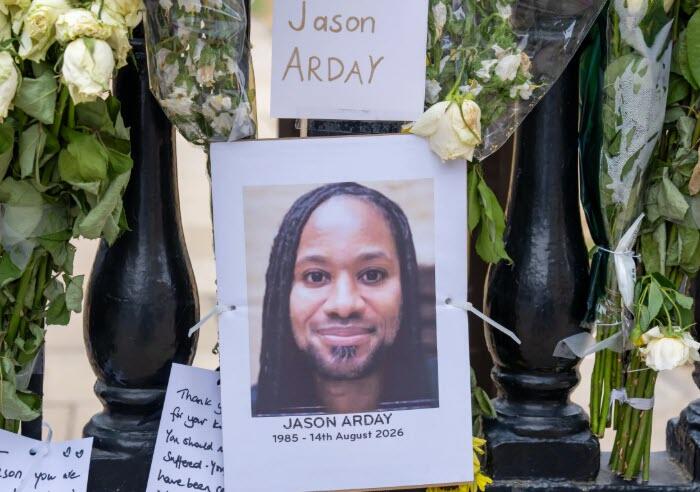
The Arday Tragedy: A Story Of Institutional Failure, Not A Witch Hunt
The short version
- Much of the media narrative has positioned Nathan Cofnas as the villain, the man who exposed plagiarism and, in doing so, supposedly hounded a vulnerable academic to his death.
- This is a convenient story, but it is not the truth.
- Yet he has been suspended from his post as a postdoctoral researcher in the Department of Philosophy and Moral Sciences at Ghent University.
- He brought to light legitimate concerns about Jason Arday’s academic record.
- That is the function of journalism and scholarly scrutiny.
The story
Authored by Lipton Matthews via The Mises Institute,
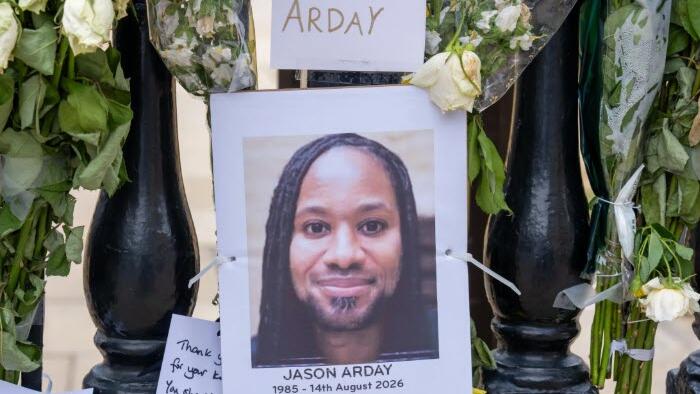
The recent death of Jason Arday has been met with widespread grief, but also with a disturbing rush to assign blame.
Much of the media narrative has positioned Nathan Cofnas as the villain, the man who exposed plagiarism and, in doing so, supposedly hounded a vulnerable academic to his death.
This is a convenient story, but it is not the truth.
Let us be clear. Nathan Cofnas did nothing wrong. Yet he has been suspended from his post as a postdoctoral researcher in the Department of Philosophy and Moral Sciences at Ghent University. He brought to light legitimate concerns about Jason Arday’s academic record. That is the function of journalism and scholarly scrutiny. If the allegations were false, Arday would have defended himself more effectively. If they were true, then they deserved to be aired. The fact that Arday was mentally unwell is tragic, but it does not retroactively make Cofnas’s actions malicious. We do not hold journalists responsible for the pre-existing vulnerabilities of those they cover.
This is not the first time a scandal has broken around a prominent figure. Stephen Glass—once a star at the New Republic—saw his career implode when his fabrications were exposed. He did not retreat; he wrote a novel about his disgrace, turning infamy into profit. Jayson Blair—the New York Times plagiarist—did the same. Both men monetized their scandals. Jason Arday’s exposure came in the age of social media, so the venom was more intense, but the principle is unchanged. Public figures often exploit controversy for personal gain. That Arday could not do so is unfortunate, but it is not evidence of a uniquely cruel campaign against him.
What is striking about Arday’s case is the institutional support he received. Diane Abbott and prominent Cambridge academics rallied to his defence. Compare this to the treatment of Charles Negy, Linda Gottfredson, Arthur Jensen, Helmut Nyborg, and others who have been vilified as racists simply for engaging with research on intelligence and group differences. Gottfredson continues to be defamed by the disgraced Southern Poverty Law Center. Nyborg had to sue the Danish Committees for Scientific Dishonesty for falsely accusing him of scientific misconduct. Negy is not even a race researcher; he was penalized by his university for saying that black privilege is real. As Negy put it, “beyond affirmative action, special scholarships, and other set asides, being shielded from legitimate criticism is itself a form of privilege.” None of these scholars had the institutional backing that Arday enjoyed. He was given an opportunity on a platter of gold. However, he failed to distinguish himself and, when the scrutiny came, he could not withstand it.
The real lesson of this harrowing tale is not a racist media hounding a black academic to death. It is the intensity of what might reasonably be called black privilege—a system that elevates individuals to positions they are not prepared for, shields them from criticism, and then reacts with shock when reality intrudes. Mike Adams - a white academic - was badgered to suicide in 2020 by social media and his university simply because people found his tweets offensive. Unlike Arday, he received no institutional support from elite institutions, nor was there an outpouring of solidarity. The difference between his case and Arday’s is glaring.
Invariably, the hatred directed at Nathan Cofnas stems not from his role in the Arday affair, but from his wider writings on race and intelligence. Cofnas holds that racial differences in intelligence are partially genetic. This is controversial, but it is not unsupported. Psychologist Russell Warne has defended similar positions in his book In the Know: Debunking 35 Myths About Human Intelligence. Even if the hereditarian view is ultimately wrong, the environmentalist thesis has failed to produce a convincing alternative. Not much has changed since Arthur Jensen’s landmark 1969 report How Much Can We Boost IQ and Scholastic Achievement? Robert Plomin’s more recent text Blueprint: How DNA Makes Us Who We Are reinforces the point that parental influence is largely genetic. Cognitive gaps between blacks and whites persist even when both groups are similar in socioeconomic status, education, and other environmental measures. The reality is that—irrespective of the truth of hereditarianism—groups will differ in behavior and intelligence. If elites would simply accept this, we could stop obsessing over erasing every disparity and instead focus on helping people thrive where they are.
In an ordinary world, Jason Arday might have been a successful PE teacher, or even a comedian.
He had charm, energy, and a compelling personal story.
He died because Cambridge elevated him to a position for which he was not prepared, and the inevitable scrutiny crushed him.
When he was alive, Arday said he wanted the world to spin on an axis of love. But the truth is that the DEI fanaticism that elevated him, and ultimately destroyed him, was propelled by an excess of love for egalitarianism, a love so blind that it refused to see the human cost of its own ideology.
Jason Arday’s death is a tragedy. But it is not Nathan Cofnas’s fault. It is the fault of a system that prioritizes symbolism over substance, and then abandons its symbols when they fail.
If we want to honor Arday’s memory, we should begin by telling the truth about how he got there and who really put him in harm’s way.
Related Markets
All MarketsMarket data may be delayed. Not financial advice.
Powered by Gab AI
The Story At A Glance
Reading this article now — analysis appears below
💡 AI analysis provides alternative perspectives on current events