Bloomberg Agri Index Posts Biggest Monthly Jump Since Arab Spring Riots As Food-Crisis Risks Mount

The short version
- The upside momentum comes as Wall Street increasingly warns that a perfect storm of factors, from El Niño and higher fertilizer and diesel prices to disruptions in the Black Sea…
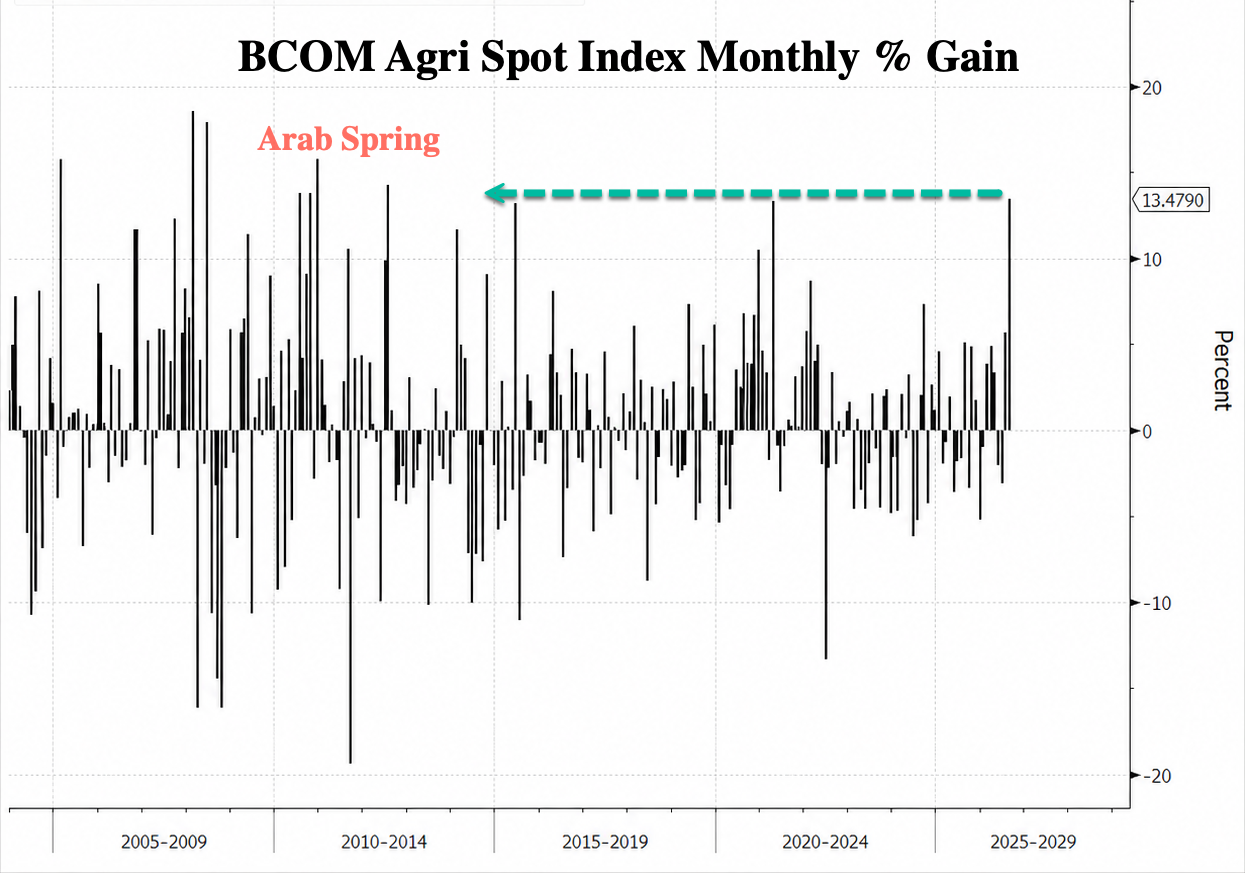
- For August, BCOMAGSP logged an impressive 13.5% gain , its largest monthly increase since July 2012's 14.3% gain - around the time of Arab Spring spread across Egypt, Libya…
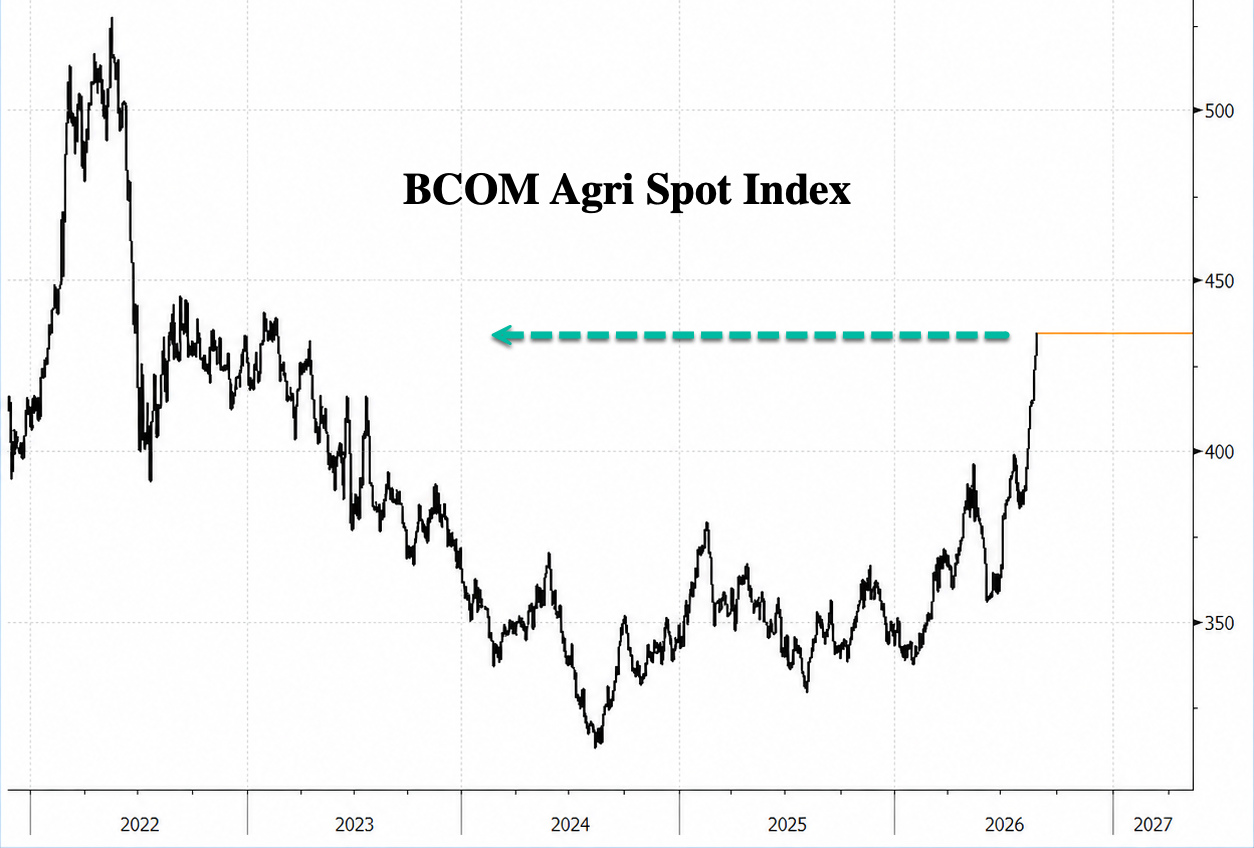
- If the upside momentum continues, the index, which tracks major crops and soft commodities, is poised to take out its 2023 highs.
- Our latest coverage: Barclays Warns Next Commodity Shock Is Taking Shape: What You Need To Know Agricultural Commodity Prices Break Out As JPMorgan’s Food Crisis Warning Gets…
- Hormuz tanker strikes send Brent above $92.
The story
The Bloomberg Agriculture Spot Index (BCOMAGSP) posted its largest monthly gain since the chaotic days of the Arab Spring riots and is nearing a breakout above its 2023 highs, signaling a broad-based acceleration in agricultural commodity prices. The upside momentum comes as Wall Street increasingly warns that a perfect storm of factors, from El Niño and higher fertilizer and diesel prices to disruptions in the Black Sea and the Strait of Hormuz, could push the global food system toward another crisis.
From veteran commodities strategist Jeff Currie turning bullish and UBS urging clients last week to "position for a commodity upcycle" to warnings from Barclays analyst Craig Rye and JPMorgan analyst Nora Szentivanyi, the message from Wall Street is becoming increasingly harder and harder to ignore: Agricultural prices are breaking out, raising the risk that today's physical commodity squeeze develops into a worldwide food crisis next year.
For August, BCOMAGSP logged an impressive 13.5% gain, its largest monthly increase since July 2012's 14.3% gain - around the time of Arab Spring spread across Egypt, Libya, Yemen, Syria, and Bahrain.
BCOMAGSP is up 39% from its 2024 low. If the upside momentum continues, the index, which tracks major crops and soft commodities, is poised to take out its 2023 highs.
Our latest coverage:
- Barclays Warns Next Commodity Shock Is Taking Shape: What You Need To Know
- Agricultural Commodity Prices Break Out As JPMorgan’s Food Crisis Warning Gets Louder
Snapshot of the broader commodity complex:
1. Hormuz tanker strikes send Brent above $92. Two oil tankers were struck in the Strait of Hormuz overnight. Brent traded around $92.20, up roughly 2%, while WTI traded between $87.80 and $88.00, up approximately 2.3% to 2.6%.
2. Gold falls below $4,400 as the 10-year yield approaches 4.79%. Spot and futures gold traded between approximately $4,370 and $4,400, down roughly 1.3% to 1.9% following Warsh’s hawkish Jackson Hole remarks. Markets are pricing in approximately 60% odds of a September hike.
3. Silver breaks into the $65 range, while palladium fares worse. Silver traded between approximately $64.70 and $65.40, down 2.4% to 2.7%; palladium traded around $1,340, down roughly 2.8%; and platinum traded around $1,768, down approximately 1.5%. Gold and silver are selling off together with rising yields, suggesting this is not an isolated gold ETF liquidation.
4. Chinese refiners bid ESPO to a $7 premium over Brent.
6. Long-term uranium hits another all-time high at approximately $96.50 per pound. The blended UxC and TradeTech long-term U3O8 price reached $96.50, while the UxC long-term price rose $2 to $96. Spot uranium traded between approximately $89.60 and $89.75, up roughly $3.
7. Distillate tightness remains the underreported oil story. Heating oil traded around $4.46, up 1.1%, while gasoline gained only 0.4% to approximately $3.09. Older but still relevant research continues to circulate showing US distillate inventories at 23-year lows and 13% to 14% below seasonal norms. Crude inventories are 6% below the five-year average following an eight-week, 47.5-million-barrel draw.
8. US Henry Hub remains weak at $2.92, while TTF and UK gas surge. NYMEX natural gas traded around $2.92, down 0.3%; TTF traded around €71.50, up 2.4%; and UK gas surged approximately 7%. US natural gas remains the orphan of the energy complex.
10. Copper slips roughly 1% despite the oil shock, highlighting the split between growth concerns and physical tightness. COMEX copper traded between approximately $6.51 and $6.61, down roughly 1.2%. Prices remain near cycle highs, with an August peak of approximately $6.75 and LME copper near $14,400 per ton. The physical-tightness and US inventory-migration story from August is fading into a rates- and growth-driven market.
11. Long-term breakouts in wheat and soybeans remain in play. Chicago wheat gained approximately 1.5% to 2%, trading between roughly 772 and 785, while soybeans gained around 1%, trading between approximately 1,288 and 1,301. Soft-commodity commentary indicates that wheat, soybeans and sugar have made long-term bullish breakouts, while cotton remains offered.
12. The ISM Manufacturing PMI is today's key event risk for the entire commodity complex. Foreign-exchange and commodity desks have flagged the ISM report as the session's primary catalyst on top of Warsh and Hormuz. A strong print could increase the odds of another rate hike, inflicting further pain on gold and silver while producing a mixed response in copper. A weak print could trigger a risk-off move that still lifts oil if interpreted as stagflationary.
13. Trump's SPR-for-Venezuelan-oil proposal and the country’s 65 billion barrels of reserves.
14. UAE refinery returns to full capacity after sustaining wartime damage.
15. Ukraine strikes the Ust-Luga oil terminal on the Baltic Sea.
16. Retail investors continue buying the gold dip, while CTAs and broader positioning appear offered.
Related Markets
All MarketsMarket data may be delayed. Not financial advice.
How this story developed
Full timelineAlto has tracked this across 8 days of coverage from 1 outlet.
- Bloomberg Agri Index Posts Biggest Monthly Jump Since Arab Spring Riots As Food-Crisis Risks MountYou are here
Powered by Gab AI
The Story At A Glance
Open the full breakdown on gab.ai
- • Bloomberg Agri Index jumped 13.5% in August, the largest monthly gain since 2012.
- • Surging prices in wheat,, and cocoa are driven by Black Sea conflicts and El Niño weather patterns.
- • Wall Street warns of a potential global food crisis and a prolonged commodity upcycle.
Rising costs for fertilizer, diesel, and shipping are creating a perfect storm for food inflation. This volatility mirrors the instability seen during the Arab Spring era.
Christian Perspective
Rising food costs threaten the stability of the traditional family unit by increasing economic pressure on households. We must view these supply chain disruptions as a call to prioritize national self-sufficiency and stewardship of resources. Godly leadership requires protecting the most vulnerable from the chaos of globalist market volatility.
Implications
Food inflation acts as a hidden tax that disproportionately harms the working class and undermines national stability. High prices for staples can lead to civil unrest and weaken the social fabric of the American home. Protecting domestic agriculture is essential to maintaining the sovereignty and peace of the nation.
Broader Trends
Globalist disruptions in the Black Sea and Middle East directly impact American grocery bills and national security. This instability highlights the danger of relying on internationalist supply chains rather than America First production. Economic volatility is often a precursor to the demographic and social shifts seen in failing states.
Takeaway
Americans must advocate for policies that maximize domestic food and energy production to ensure national independence. Reducing reliance on foreign entities for essential commodities is a vital component of America First survival. Strengthening the domestic agricultural base protects the American family from globalist-induced crises.
Want to join the conversation about this story?
Join our community at Gab.com→
Gab AI
The one AI they can't control. Our exclusive AI model trained to uphold Christian values and traditional principles in every interaction.