Tokenmaxxing Turns To Layoffmaxxing: Uber Slashes Thousands In "Significant" Overhaul
The short version
- " Today, we're making several significant organizational changes across Uber.
- We are removing layers, simplifying team structures, refining our global location strategy, and focusing our people and investments against the biggest opportunities ahead of us…
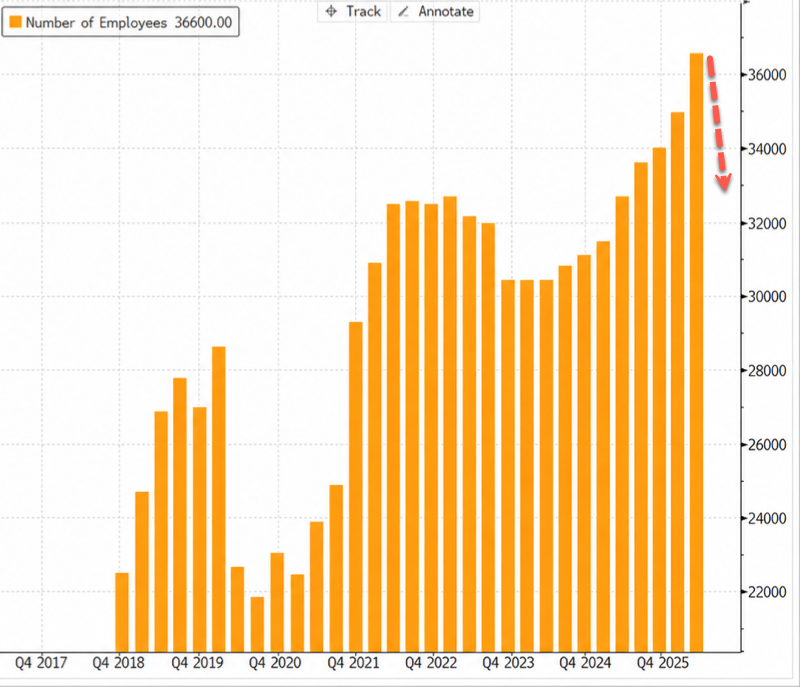
- The latest Bloomberg data show that, as of 2Q26, Uber employed 36,600 people across its global workforce, meaning a 10% cut equates to about 3,600 workers.
- Uber will eliminate nearly half of its teams with only one or two members and reduce by 20% the number of employees positioned seven or more organizational layers below the CEO.
- In other words, the restructuring is impacting white-collar workers that AI agents can likely replace.
The story
Bloomberg obtained a letter from Uber Technologies CEO Dara Khosrowshahi to employees announcing "significant organizational changes" across the company aimed at reallocating spending toward delivery, artificial intelligence, and an increasingly expensive robotaxi buildout.
"Today, we're making several significant organizational changes across Uber. We are removing layers, simplifying team structures, refining our global location strategy, and focusing our people and investments against the biggest opportunities ahead of us," Khosrowshahi wrote in the letter.
The latest Bloomberg data show that, as of 2Q26, Uber employed 36,600 people across its global workforce, meaning a 10% cut equates to about 3,600 workers.
Uber will eliminate nearly half of its teams with only one or two members and reduce by 20% the number of employees positioned seven or more organizational layers below the CEO. In other words, the restructuring is impacting white-collar workers that AI agents can likely replace.
The company is also combining engineering and science teams while consolidating its separate restaurant, retail, and white-label delivery operations.
There was a report earlier this year that Uber had blown through its AI budget within the first few months of the year after encouraging employees to use frontier models as aggressively as possible.
We summed that up perfectly...
Tokenmaxxing -> Layoffmaxxing https://t.co/ZHHLQDhIHO
— zerohedge (@zerohedge) September 2, 2026
Savings from the restructuring will be reinvested in Uber's core ride-sharing and delivery platforms, as well as the company's effort to build what Khosrowshahi called an "autonomous future."
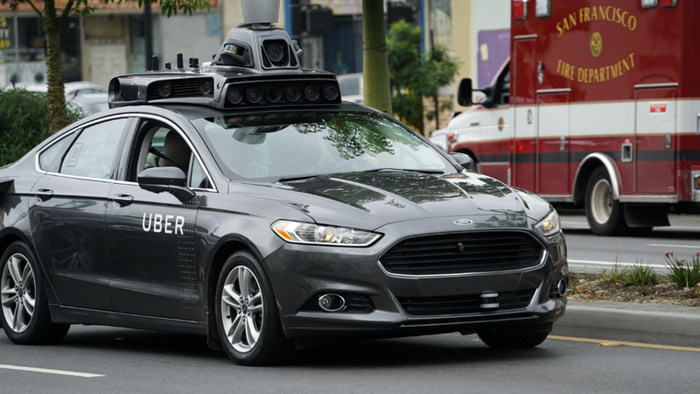
Uber has pledged to invest more than $10 billion in robotaxi partnerships over the coming years as it seeks to become the dominant top player for summoning autonomous vehicles. The company has already invested in Avride, Lucid, Nuro and Rivian while reducing stakes elsewhere to free up capital.
WAYMO IS FIGHTING THE ROBOTAXI WAR WITH AN EXPENSIVE & CLUNKY PROOF OF CONCEPT COMPARED TO A SLEEK TESLA MODEL
— 🌋🌋 Deep₿lueCrypto 🌋🌋 (@DeepBlueCrypto) September 2, 2026
Eight boxy Waymos. One million dollars.
Each one a $125,000 science project: lidar hats, radar arrays, custom compute, a chassis that still costs more than some… pic.twitter.com/jkYTD78rJ3
Khosrowshahi's companywide email in full: Team,
Team,
Today, we're making a number of significant organizational changes across Uber. We are removing layers, simplifying team structures, refining our global location strategy, and focusing our people and investments against the biggest opportunities ahead of us. As a result, we will be reducing the size of our team by about 10%. Everyone whose role has been affected has already been notified, except in countries where we will follow the required local process.
This wasn't a decision we made lightly, because it will have a real impact on our teammates and friends who have worked hard for Uber. It's important to say that these changes are about how we're organized and what we're prioritizing, not about anyone's contributions to Uber, which we always value.
I'm sure you're asking, 'Why, and why now?'—particularly since our business is performing so well. Over the last 5+ years, Uber has grown by orders of magnitude, with our top line nearly tripling. We've built new products, expanded into new businesses, reached more consumers and supported more earners, and become a much larger and stronger company. But that growth has also brought complexity: more layers, more coordination, more fragmented ownership, and in some cases structures that made sense when businesses were smaller but no longer serve us well at our current scale.
Our opportunity from here is enormous: we have the chance to bring Uber to hundreds of millions more people; to invest even more in drivers, couriers and merchants; and to innovate across our core businesses and build the autonomous future.
To do those things, we need to make deliberate choices about where we put our people, our time, and our capital.
The changes we're making today are designed to do two things: make Uber simpler and faster, and create more capacity to invest in our future. A leaner organization will mean clearer ownership, faster decisions, and more time spent building rather than coordinating. It will also generate savings that we intend to reinvest in growth, innovation, and the capabilities that will matter most over the coming years.
It's our job as leaders to make these difficult calls, and to give you transparency into our thinking and our decision-making process. Here's what we are doing and why:
- Organizational health: In Pulse surveys and conversations with many of you, we've heard that too much work requires coordination across teams, debates take too long, and decision-making rights are unclear. I'm sure many of you have felt that you spend too much time "aligning" rather than building, shipping, or serving customers. To improve this, we have reduced roles primarily focused on coordination, and have clarified the remit of the coordination roles that remain. We also cut down the number of management layers by broadening manager scopes, particularly where we had "micro-teams" of only 1-2 reports. In all, we've reduced the number of employees who sit 7+ layers from the CEO by 20% and the number of micro-teams by nearly 50%. The outcome is a simpler org chart geared toward building versus managing.
- Team simplification: We brought together teams where fragmentation was creating duplication and slowing decisions. The most significant example of this is Mac's decision to combine our three current Delivery Ops teams (across Restaurants, Retail, and Direct) into single-threaded teams at the global, regional, and country levels. Running these three businesses separately made sense in their early days, but that structure is no longer serving us at scale. Bringing the P&Ls together under single owners will reduce overlap, clarify accountability, and allow GMs to allocate capital more efficiently and effectively based on their strategic imperatives. Another example of this: in Tech, we're combining our Core Services Engineering and Science teams, mirroring the structure we already have on Mobility and Delivery.
- Location strategy: The benefits of sitting together, collaborating in person, and solving problems as a team are clearer than ever in our post-Covid world. With that in mind, we're establishing clearer principles for where roles and teams should be based, with the goal of concentrating teams in a smaller number of key hubs. Global teams will be concentrated in our largest global hubs, NY and SF; regional teams in designated regional hubs; local teams in country hubs; and tech teams in tech hubs. We'll prioritize co-location between managers and their teams wherever possible, particularly for earlier-career employees. We are also asking the vast majority of remote employees to move to an office, and going forward, only ~1% of employees will be remote. We'll also continue to reinforce compliance with our hybrid work policy, which requires three days a week in the office. You can read more about our location strategy here.
I realize this is a lot of change, but we decided it was better to make one big shift rather than multiple small ones. We also know organizational changes can be hugely distracting, and our job is to create an environment that allows you to focus and do your best work. With these decisions now made, our focus is on the future.
We have tremendous momentum, significant financial capacity, and opportunities in front of us that are larger than at any point since I joined the company. The decisions we're making today are difficult, but they will help us build an even stronger Uber for the years ahead.
You can read more about the changes across the company here, and please be sure to read specific follow-up information you'll receive from your leaders about what this means for your team, so we can all keep building together.
Uber on,
Dara
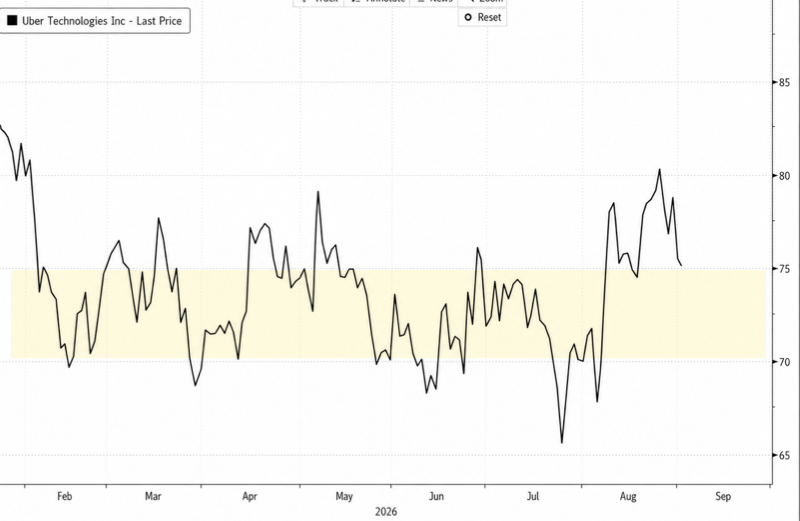
The restructuring follows a subdued stretch for Uber shares this year, which were down 8% year-to-date through Tuesday's close after trading largely range-bound between $70 and $80.
The market welcomed the cost-cutting measures, with shares gaining nearly 2% in premarket trading in New York.
Related Markets
All MarketsMarket data may be delayed. Not financial advice.
Powered by Gab AI
The Story At A Glance
Reading this article now — analysis appears below
💡 AI analysis provides alternative perspectives on current events