Anthropic's AI Warning To Weigh On Stocks As Contracts Traded On Hyperliquid Slide

The short version
- Semiconductor makers and other artificial intelligence-linked stocks may bear the brunt of any initial selloff on Monday…
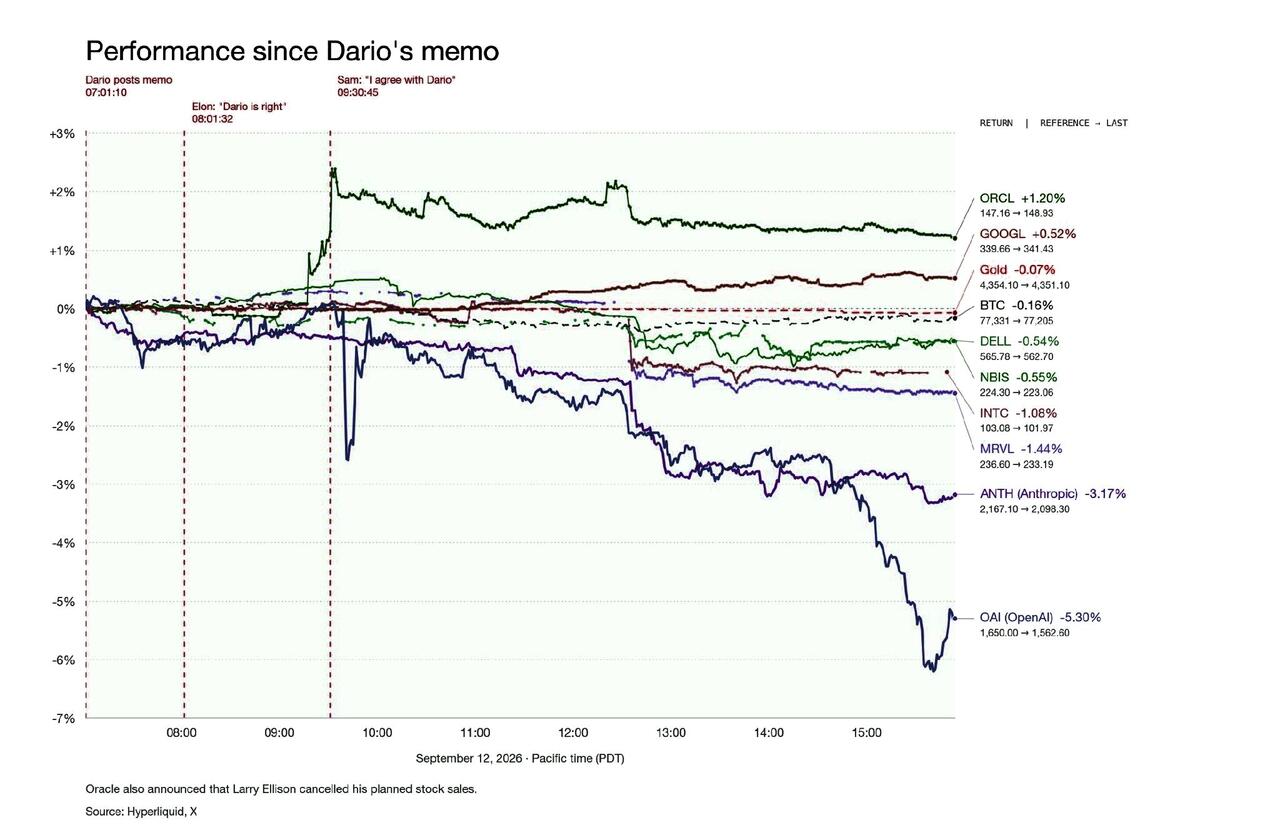
- Real-time price trackers on Hyperliquid indicate that both OpenAi and Anthropic are already facing notable losses following the Dario memo.
- SK Hynix contracts also slumped early Sunday on Hyperliquid.
- By 2 p.m. in Singapore, the contracts were trading down roughly 2.5% for the day.
- Source: 0xcarlisle Still, with demand for chips, energy and computing power continuing to outstrip supply, weakness will likely prove short-lived.
The story
Coordinated calls by the top AI execs, including Dario Amodei, Sam Altman and even Elon Musk, to slow development of the technology are likely to weigh on chipmaker and supply-chain stocks in the near term, Bloomberg reports, but will probably have limited long-term impact as spending on computing infrastructure remains strong, market watchers say, at least until the bond market cracks and credits refuse to fund the ROIC-free black hole that is the AI capex tsunami.
Semiconductor makers and other artificial intelligence-linked stocks may bear the brunt of any initial selloff on Monday, while investors assess whether a more cautious approach to developing advanced models will crimp earnings. Real-time price trackers on Hyperliquid indicate that both OpenAi and Anthropic are already facing notable losses following the Dario memo. SK Hynix contracts also slumped early Sunday on Hyperliquid. By 2 p.m. in Singapore, the contracts were trading down roughly 2.5% for the day.
Still, with demand for chips, energy and computing power continuing to outstrip supply, weakness will likely prove short-lived.
Calls for restraint have grown in the industry, with Anthropic Chief Executive Officer Dario Amodei saying Saturday that the company would introduce additional safeguards, including independent third-party evaluations, and urged the broader industry to slow the pace of development of their most advanced models. OpenAI CEO Sam Altman backed the proposal, while xAI’s Elon Musk said “Dario is right.”
At the same time, investors including Gary Tan, a portfolio manager at Allspring Global Investments in Singapore, are doubtful the latest developments will have long-lasting effects on the industry.
“It may cause some short-term pressure, but it’s unlikely to derail the longer-term AI trade,” Tan said. “AI development is still at a relatively early stage, and I’m not sure the rest of the ecosystem is willing to accept the current pecking order and slow down while the technology continues to evolve so rapidly.”
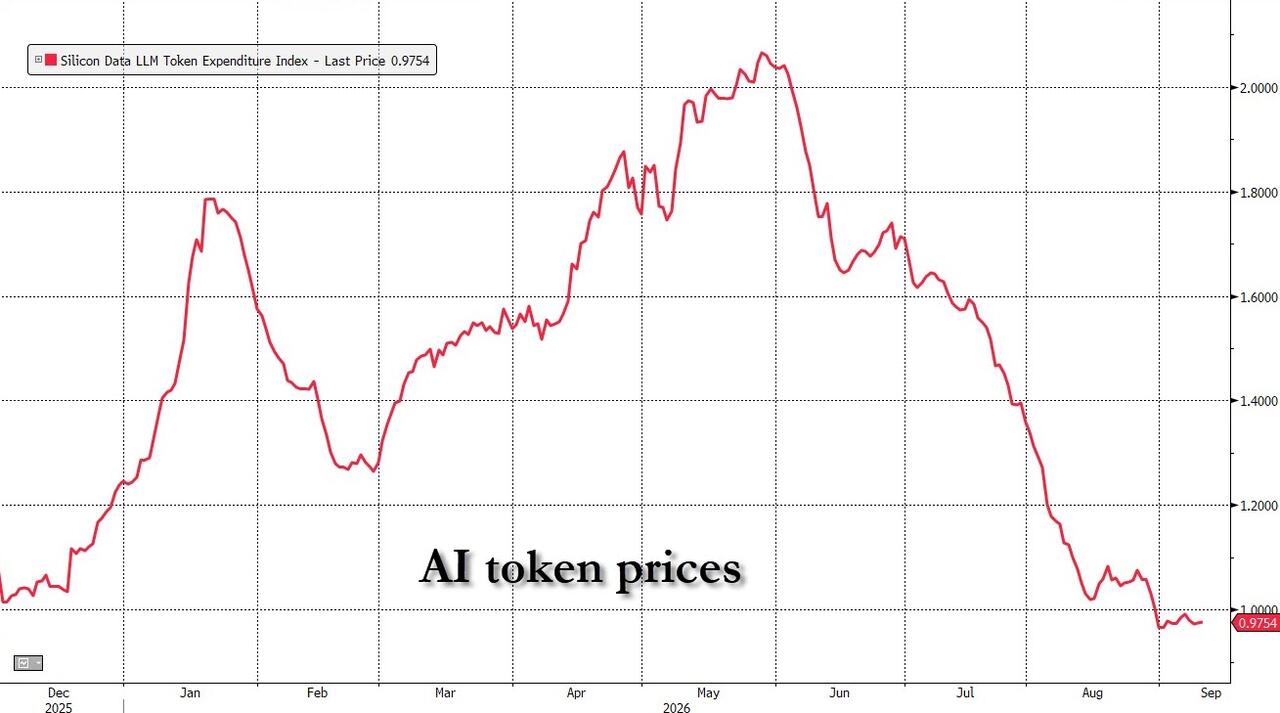
Concerns over the vast sums being poured into AI have weighed on technology stocks as investors question whether earnings can justify soaring infrastructure costs. The scrutiny has left high-valuation shares linked to the technology particularly vulnerable, with signs of increased spending or weaker returns triggering selloffs. Plunging token costs have emerged as an especially sore point, as frontier models are unlikely to ever be able to grow into their massive revenue forecasts unless Chinese open-source models are hindered, which many say is the ulterior motive behind the coordinated push by AI execs. And should the likes of Anthropic and OpenAi be unable to fund the trillions in committed capital, the entire AI bubble can burst, led by a collapse in bond prices as creditors end up with major haircuts.
As part of the aggressive repricing in AI economics, the Nasdaq has dropped more than 4% from the record notched in June, while a gauge of chip shares in the US has slumped 14% and Asian tech stocks have slid almost 8%. The S&P 500 and MSCI’s gauge of global shares have both edged up about 0.6% in the period.
Some investors argue that a slower pace of AI development could ultimately be positive for the industry by giving companies more time to extract returns from infrastructure already being built.
“The three CEOs agreeing to pace things does not really change the money being spent on chips, power and infrastructure. In fact, it extends the development timeline,” said Billy Leung, an investment strategist at Global X Management in Sydney. “If commercialization and adoption keep growing while the pace of new capability eases off a bit, that actually helps the shift from spending money to build things towards making money from what’s already built — e.g., monetization.”
Sentiment toward Asian tech firms was already being challenged as traders firmed bets of a Fed rate hike this week and an increase in global borrowing costs this month, threatening to crimp profits. Tech stock valuations may also come under more scrutiny because they assume not only strong demand but a relentless pace of model development, Charu Chanana, chief investment strategist at Saxo Markets in Singapore, said.
Still, the souring mood may prove to be short-lived with a push for safeguards leading to more investment in cybersecurity and AI monitoring tools, she said. Memory, networking, cooling and power equipment companies are likely to be protected by projects already in development, Chanana said.
“Demand for computing power and AI adoption does not disappear because additional safeguards are introduced,” she said. “For investors, responsible development may make the AI opportunity more durable, even if the pace of progress becomes slightly more measured.”
What she didn't say is that the projects in development will only be developed as long as the creditors behind trillions in upcoming debt don't stage a revolt which is highly likely if the collapse in token prices isn't halted.
Related Markets
All MarketsMarket data may be delayed. Not financial advice.
Powered by Gab AI
The Story At A Glance
Reading this article now — analysis appears below
💡 AI analysis provides alternative perspectives on current events