Trump Admin Targets States' Medicaid Fraud Units
The short version
- In response, Vance said the administration would withhold $1.3 billion in Medicaid-related payments to California and also consider withholding from other states.
- The administration put each of the 50 states on notice with recent letters signed by Health and Human Services Inspector General Thomas “March” Bell.
- It focused on state-level Medicaid Fraud Control Units (MFCUs), which receive federal funding.
- Letters also went to the District of Columbia, Puerto Rico, and the U.S.
- Here’s what to know about the units and Vance’s efforts.
The story
Authored by Tom Gantert via The Epoch Times,
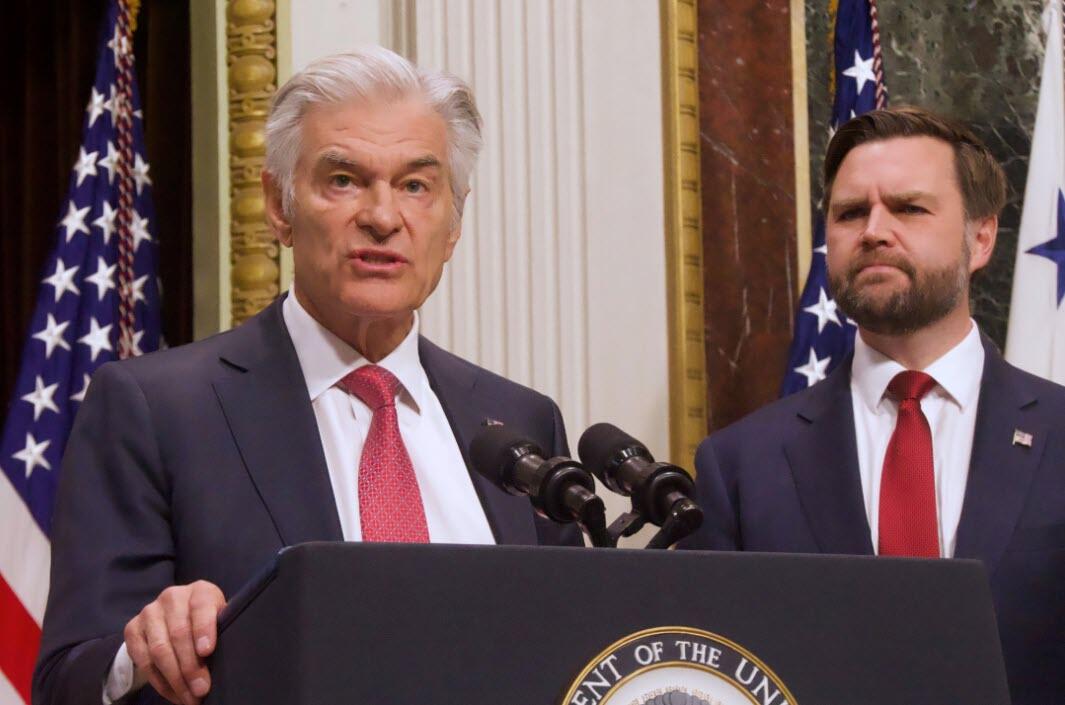
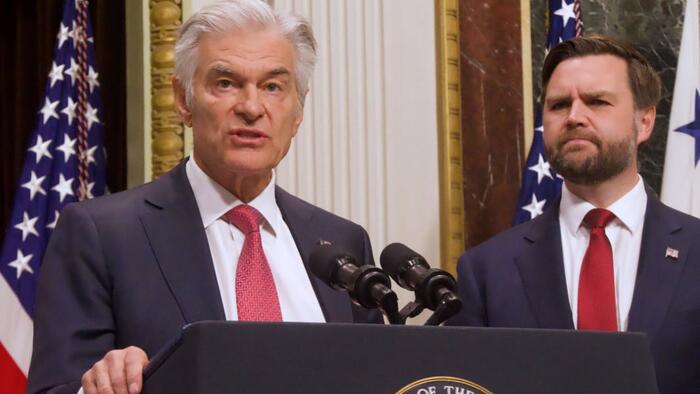
Vice President JD Vance said during a recent press conference that he was intensifying attempts to counter Medicaid fraud by investigating state-level units responsible for oversight.
States such as California and Hawaii seemed to lag behind others in combatting fraud, said Vance, whom the president picked in March to lead an anti-fraud task force.
“Now, we have red states and blue states that go after fraud aggressively, but we also unfortunately have some states, mostly blue states, unfortunately, that do not take Medicaid fraud very seriously,” he said.
In response, Vance said the administration would withhold $1.3 billion in Medicaid-related payments to California and also consider withholding from other states.
The administration put each of the 50 states on notice with recent letters signed by Health and Human Services Inspector General Thomas “March” Bell. It focused on state-level Medicaid Fraud Control Units (MFCUs), which receive federal funding.
Letters also went to the District of Columbia, Puerto Rico, and the U.S. Virgin Islands.
Here’s what to know about the units and Vance’s efforts.
Federal Grants at Stake
The letters threatened to take away all federal grants provided to a state’s Medicaid program if the state was not fulfilling its duties.
“It has become clear ... that many MFCUs have been happy to rake in taxpayer dollars without fighting fraud,” Bell stated in the letter. “And for too long, there has been a lack of leadership at HHS that has allowed billions of our fellow Americans’ dollars to flow out to State capitals to fund MFCUs to supposedly fight Medicaid fraud without any real oversight.”
He said that the units must comply with certain requirements to receive funding. Federal law requires the units to investigate and prosecute fraud, investigate patient abuse and neglect in Medicaid-funded facilities, and recover overpayments.
The units must operate statewide, employ investigators, auditors, and attorneys, and remain separate from the state agency that administers Medicaid. The law requires the units to either possess prosecutorial authority or formally coordinate with prosecutors.
Bell told the attorneys general that “your failure to do your job as head of the MFCU has put all of your State’s Medicaid funds in jeopardy.”
Michigan Attorney General Dana Nessel’s office told The Epoch Times that the administration wrongly accused the state.
“That the new HHS-[Office of Inspector General] would send such a letter to all 53 MFCU’s in the nation, writing that ‘your failure to do your job as head of the MFCU has put all of your State’s Medicaid funds in jeopardy,’ is inconceivable and completely disconnected from the performance record of Michigan’s MFCU and the tremendous reporting our office makes in compliance with the federal government’s oversight,” Danny Wimmer, Nessel’s press secretary, told The Epoch Times.
“While some states have been, over the last year, singled out by the federal government for purported performance issues, Michigan has never been among them."
The federal government covers most of the costs for MFCUs for each state.
For example, the attorney general’s unit for Michigan received a $5.5 million federal grant from the U.S. Department of Health and Human Services that covers 75 percent of its funding. The state picks up the remaining 25 percent, or $1.8 million.
In 2024, the total cost of all these state-based units was $396 million, of which $297 million was picked up by the federal government.
Wimmer said Michigan’s MFCU went through a “rigorous” recertification process every year in which the HHS’s Office of Inspector General determined whether it was in compliance with regulations.
How Do Fraud Control Units Work?
The Social Security Act requires each state to operate an MFCU.
Cases usually start as referrals from other organizations, third parties, or from MFCU staff members who detect potential fraud from data mining.
MFCU staff review referrals to determine the potential for criminal prosecution and civil action. Besides fraud, abuse and neglect are also investigated.
In 2025, about 1 in 5 cases investigated by MFCUs nationwide were for abuse and neglect. There were 3,019 investigations nationwide into abuse and neglect compared with the 12,902 investigations into fraud.
For example, Pennsylvania’s MFCU this year investigated a case involving a 50-year-old woman who was convicted of failure to renew a resident’s medications, which led to a fatal seizure in 2021.
About 4 in 10 fraud convictions from 2015 to 2024 involved Personal Care Attendants, nonmedical professionals who provide daily living assistance to people with disabilities or chronic illnesses.
Wimmer said Michigan’s unit “submits extensive questionnaires and produces significant accountings and reports on various aspects of their operations, such as investigative efforts and fiscal operations.”
He added that HHS “conducts very thorough weeklong on-site audits every 5-7 years on state MFCUs, including ours, wherein they send a team of approximately 10 inspectors to audit the fraud control unit.”
Ed Haislmaier, an expert in health care policy at The Heritage Foundation, said that although licensed providers were involved in fraud cases, fraud on an “industrial scale” appeared to occur more often in non-specialized areas of health care where professional licensing is not required.
Those sectors often included providers who could receive approval for government funding without undergoing background checks.
“The lower the barrier to entry for a type of provider, the more likely you are to see this kind of fraud,” Haislmaier said.
Targeted States
While the administration reached out to every state, Vance highlighted three—Hawaii, California, and New York—that he said were not taking fraud seriously.
During his press conference, he noted how Indiana had many more prosecutions than New York.
Vance said it was “absurd” to think that the people of Indiana were just more likely to commit Medicaid fraud than the people of New York.
“What is happening is that the leadership in New York are just not taking the fraud issue seriously,” Vance said. “They are not using these antifraud control units to actually investigate and indict the fraud.”
New York Gov. Kathy Hochul’s office didn’t respond to an email seeking comment.
HHS data revealed that Indiana had 951 investigations in fiscal year 2025 with 42 indictments and 32 convictions.
California, a top target for the Trump administration, had 1,052 investigations with 83 indictments and 43 convictions.
California Gov. Gavin Newsom’s office criticized Vance on social media.
Newsom’s office said in-home support services have grown because California is keeping seniors and people with disabilities out of the more expensive nursing homes—the cost of a nursing home was $137,000 a year compared with $30,000 a year for in-home support services.
Newsom said the approach saved taxpayers money.
Hawaii’s Medicaid investigative unit had 484 total investigations in fiscal year 2025 but not a single indictment or conviction, according to federal data.
Hawaii’s state data showed that from 2021 through 2025, the state conducted a total of 2,779 investigations into fraud and abuse that resulted in just five convictions. All were reported in 2021. That would mean Hawaii has conducted 2,104 fraud and abuse investigations from 2022 through 2025 without a single conviction.
Hawaii Attorney General Anne Lopez rejected Vance’s characterization of her state as not taking fraud seriously.
“Our Medicaid Fraud Control Unit has secured or helped secure more than $14 million in judgments, settlements and recoveries since 2021, filed recent criminal charges—and is actively working with federal and state partners to strengthen investigations and prosecutions,” Lopez said in a press release.
“We welcome accountability, but we will not allow the work of this unit to be mischaracterized as doing nothing.”
Related Markets
All MarketsMarket data may be delayed. Not financial advice.
How other outlets covered this
Compare allAlto found this story at 3 outlets. Same event, different framing — compare the headlines.
How this story developed
Full timelineAlto has tracked this across 3 days of coverage from 3 outlets.
- Trump Admin Targets States' Medicaid Fraud UnitsYou are here
Powered by Gab AI
The Story At A Glance
Reading this article now — analysis appears below
💡 AI analysis provides alternative perspectives on current events