The Potemkin Ballot
The short version
- Fraud is so fundamental to Western democracies that it is fair to say that democracies exist in name only.
- In fact, elections have become so essential to illegitimate power that they are almost the surest path to subvert the will of the people.
- Potemkin elections are essential ways for the ruling class to mask that they are truly in control.
- The notion of the divine right, or right of the aristocracy to rule, died a relatively quick death after the Renaissance.
- And the 14th-century political Renaissance led by figures such as Leonardo Bruni, the brilliant Renaissance historian who later became chancellor of Florence…
The story
Authored by Spyridon Andrews via American Greatness,
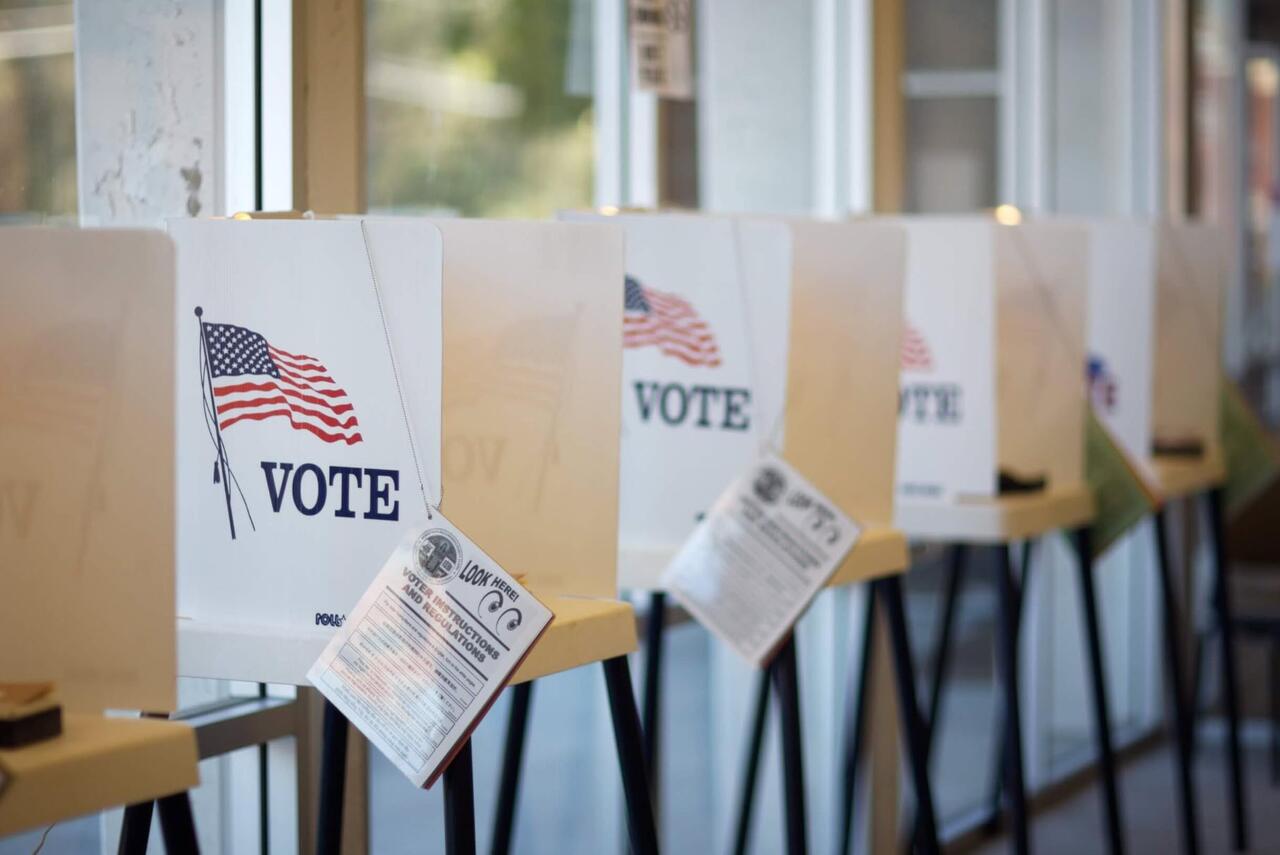
The only completely predictable result of an election in a Western democracy is election fraud.
Fraud is so fundamental to Western democracies that it is fair to say that democracies exist in name only. In fact, elections have become so essential to illegitimate power that they are almost the surest path to subvert the will of the people. Potemkin elections are essential ways for the ruling class to mask that they are truly in control. The notion of the divine right, or right of the aristocracy to rule, died a relatively quick death after the Renaissance. And the 14th-century political Renaissance led by figures such as Leonardo Bruni, the brilliant Renaissance historian who later became chancellor of Florence, brought back the notion of the Roman Republic to the modern era. Florence reinvented free elections of the citizenry; however, the notion of citizenry was limited compared to today.
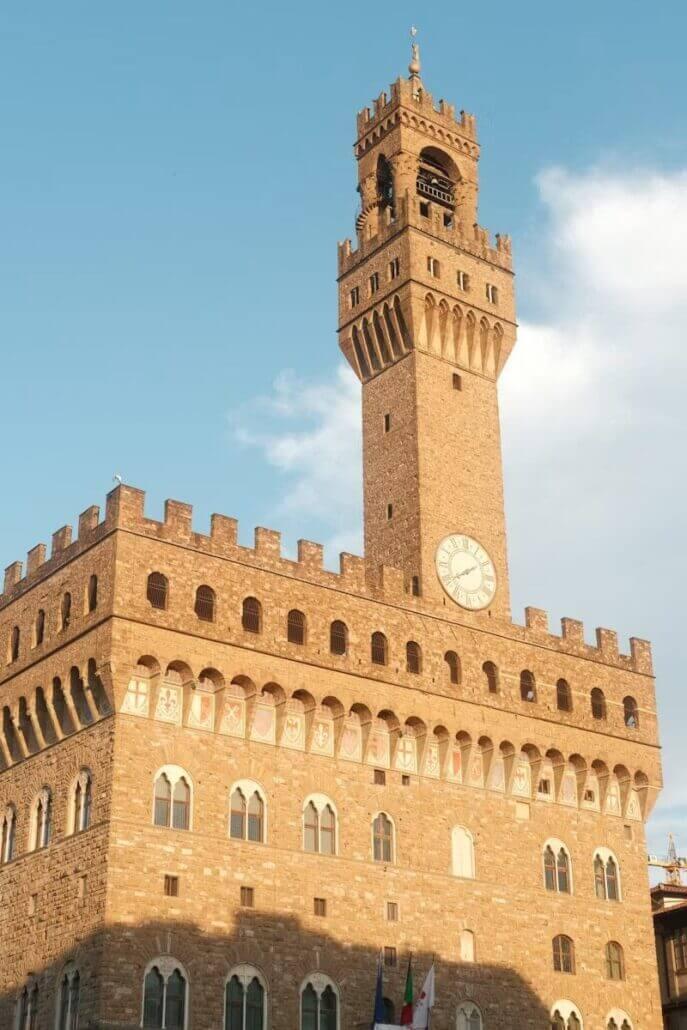
Palazzo Vecchio, the town hall of Florence, which sits on the Piazza della Signoria.
Uniquely, Florence had no king, duke, or hereditary monarch during much of the Renaissance. Power was vested in the city’s executive governing council, or the signoria. The Council was led by a chief magistrate, known as the Gonfaloniere di Giustizia or justice. There were various legislative and advisory councils, as well as guilds that represented merchants, banks, craftsmen, and professionals.
In order to avoid “corruption,” the Florentines used the lottery system. When a government position opened, names were drawn from bags. As a further precaution, terms were short, only two months, and rotations were constant.
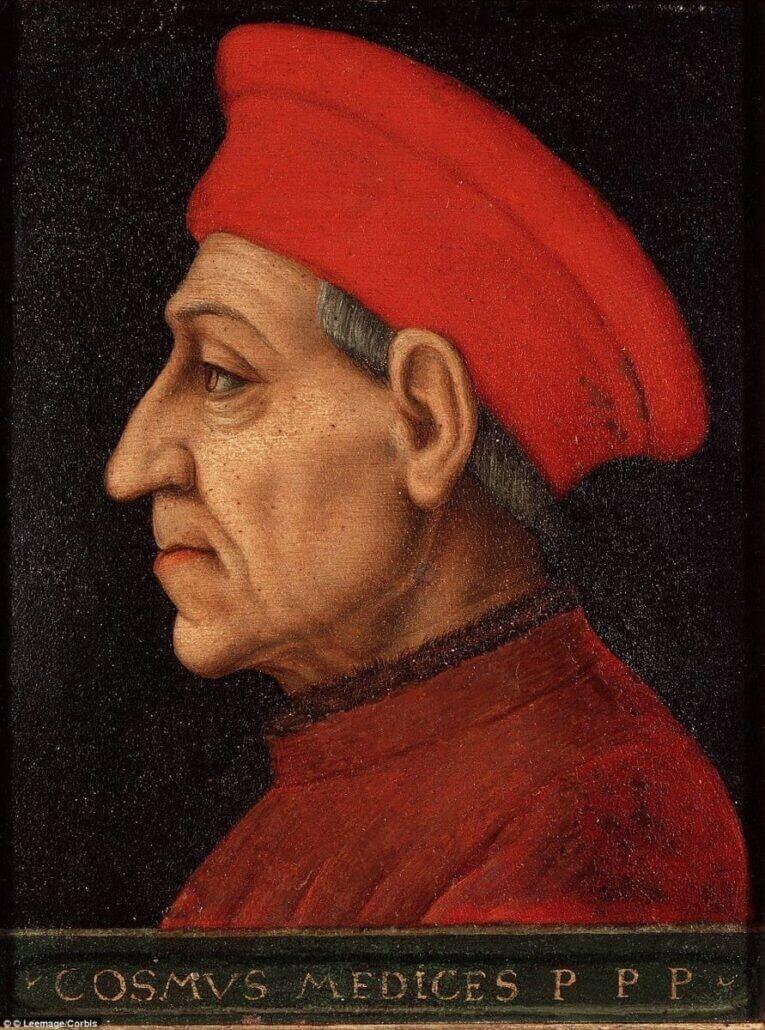
Cosimo the Elder or “Father of the Fatherland.” Posthumous portrait attributed to unknown 16th-century Florentine workshop artists.
Enter the Medici. It was Cosimo de’ Medici who transformed the system into the dynasty that is famous in history. The Medici controlled the largest banking network in Europe and, consequently, extended credit to many of the continent’s most powerful families. The success of a merchant’s business relied upon loans or assistance from the Medici. As a result, patronage opportunities were abundant, and the Medici had a ready-made army of supporters. They also had the support of the intelligentsia through their patronage of literature and the arts. There was no need for Cosimo to be elected to office or even to be seen all that much.
This, however, did not prevent the Medici from influencing electoral outcomes in their favor. Although appointments were decided by lot, there was an art to ensuring that the correct names got dropped into the lottery in the first place. Committees controlled by the Medici determined which citizens were eligible to be elected to posts. So, although a genuine lottery was held, the candidate pool was not so genuine. Florence, on the surface, held free elections and had councils, debates, and all the symbolism of republicanism. But it was controlled by the family who controlled the money supply.
If this sounds familiar, this is because the Medici’s influence extended well beyond their patronage of literature and the arts. During the reign of Louis XIII in France, Cardinal Richelieu never wore a crown. Nevertheless, he controlled foreign policy, court appointments, political alliances, and intelligence networks.
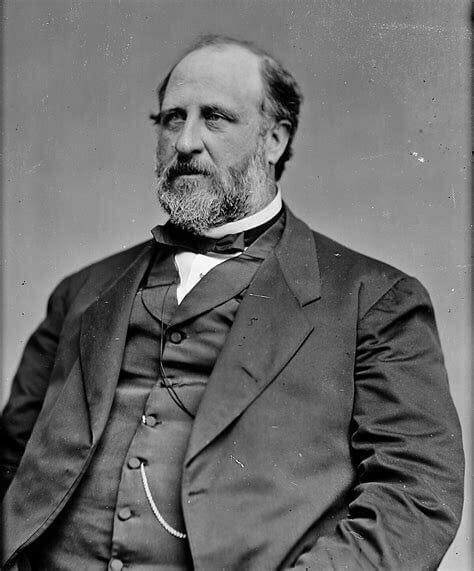
William “Boss Tweed” (1823–78)
In America in the 19th and 20th centuries, the New York machine at Tammany Hall ran the show. The outward constitutional order remained in place, while the political bosses determined the candidates who could run, who received the patronage jobs, and who was awarded the political contracts. While Boss Tweed was an important part of the machine while he was alive, the machine outlived him, and the candidates became fungible.
The same type of arrangement was in place in Chicago from the time of Mike McDonald in the late 19th century all the way to the Daleys in the late 20th and early 21st centuries. McDonald and his political machine financed businesses and candidates, controlled networks, and made or broke political careers. McDonald was succeeded by the duo of Michael “Hinky Dink” Kenna and John Coughlin, an unlikely pair of Irish mobsters who ran the gambling houses and brothels, owned the police, and made sure that their business interests were fully accommodated by the mayors they owned. While neither Boss Tweed nor Mike McDonald were above stuffing ballot boxes or breaking a few legs to ensure the appropriate result, those were matters that only needed to be resorted to in dire emergencies.
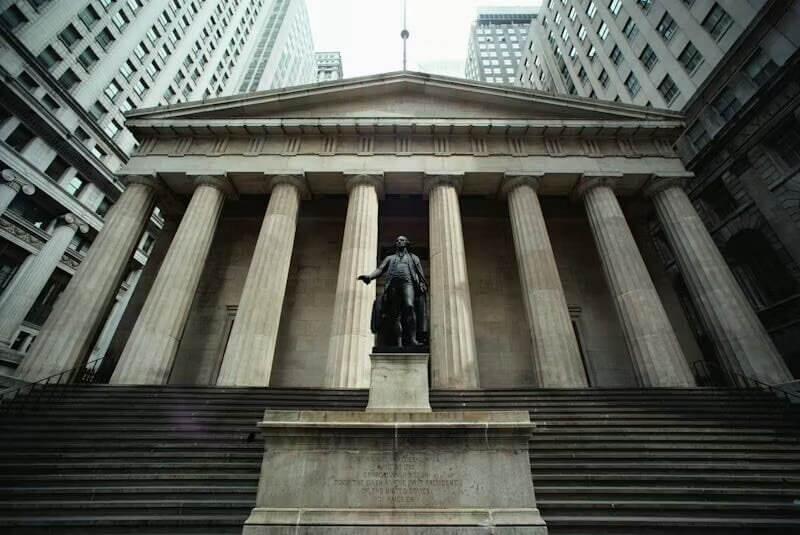
The Old Federal Building, where Washington took the First Presidential Oath of Office in 1789.
The modern-day Rothschilds are perhaps less interesting as a secret cabal than as the outrageously wealthy banking family that can make or break global banks and governments. In the late 18th century, Mayer Amschel Rothschild placed his five sons in the European financial centers of London, Frankfurt, Paris, Vienna, and Naples. From there they went on to finance governments, underwrite sovereign debt, fund railroads and infrastructure, and move money across borders as fast as their clients needed it. And it is indisputable that the Rothschilds were fundamental in creating the modern state of Israel—from funding settlements to funding the Israeli parliament building.
It is not simply that the wealthy classes needed additional help to grab political power, but they sure received it in the Citizens United case in 2010. A majority of conservative justices held that political speech is protected by the First Amendment and that the identity of the speaker, whether it is a corporation, union, or nonprofit, does not eliminate that protection. While that was all very noble, the Supreme Court further held that independent expenditures are different from direct campaign contributions and that the states could not limit such spending. Needless to say, political spending exploded, and Super PACs, industry associations, labor-backed organizations, and ideological advocacy groups began buying up politicians and votes like a Blue Light Special at K-Mart.
Politicians selling themselves like hookers on South Figueroa Street in L.A. is not enough these days. Donors need insurance policies for the peace of mind that their investments do not go to waste. And so, they are not above good old-fashioned voter fraud. The alleged appearance of 24,000 votes from nowhere in the Los Angeles Mayoral primary election this week is a testament to the new era of “mail-in balloting,” which is about as legitimate as a Florida time-share. It was the midnight deliveries of mail-in ballots in swing districts during the 2020 election that led to the Capitol protests on January 6, 2021—and the perception by nearly half of Americans that the election was outright stolen.
The utter ignorance of the history of election fraud in the United States is perhaps the major reason that anyone would believe that our federal elections are trustworthy. Apart from the outright purchase of votes in Congress, American history has consistently had patterns of repeat voting, padded rolls, absentee-ballot abuses, vote buying, dead voters, false or corrupted registrations, not to mention election-official complicity, patronage pressure, counting manipulation, control of election officials, and downright intimidation. Election fraud is not prosecuted as often as it should be, but it is prosecuted with regular frequency. The 1982 Illinois Election Fraud cases, combined with the Greylord investigations and indictments of federal and local judges, have clearly demonstrated the infiltration of organized crime into the courtroom. And allegations of organized crime connections between presidents such as Kennedy and Nixon have swirled for decades.
This does not account for the recent charges and countercharges regarding gerrymandering, the reluctance to impose voter ID requirements, allegations regarding dark-money pools, and “legal” lobbying, which is considered outright bribery in other countries. Chicago’s corruption runs so deep that the residents of the city just assume that’s the way it’s all supposed to work. In fact, I hear Chicagoans complain that the system ran better when there was more of a sticker price on what it cost to fix a traffic ticket, reduce a murder charge, or buy an alderman’s vote on a zoning permit.
The demands of a democratic society have equally necessitated workarounds for unsavory results that stem from the will of the people. It was not the will of the people that brought us into either of the World Wars in the 20th century—certain workarounds had to be put into place. Although the cost of life, around 27,000 Americans, was regrettable during the Meuse-Argonne Offensive during World War I, the conveniently placed Zimmerman telegram alleging a German–Mexican alliance was necessary to bring us into the war in the first place.
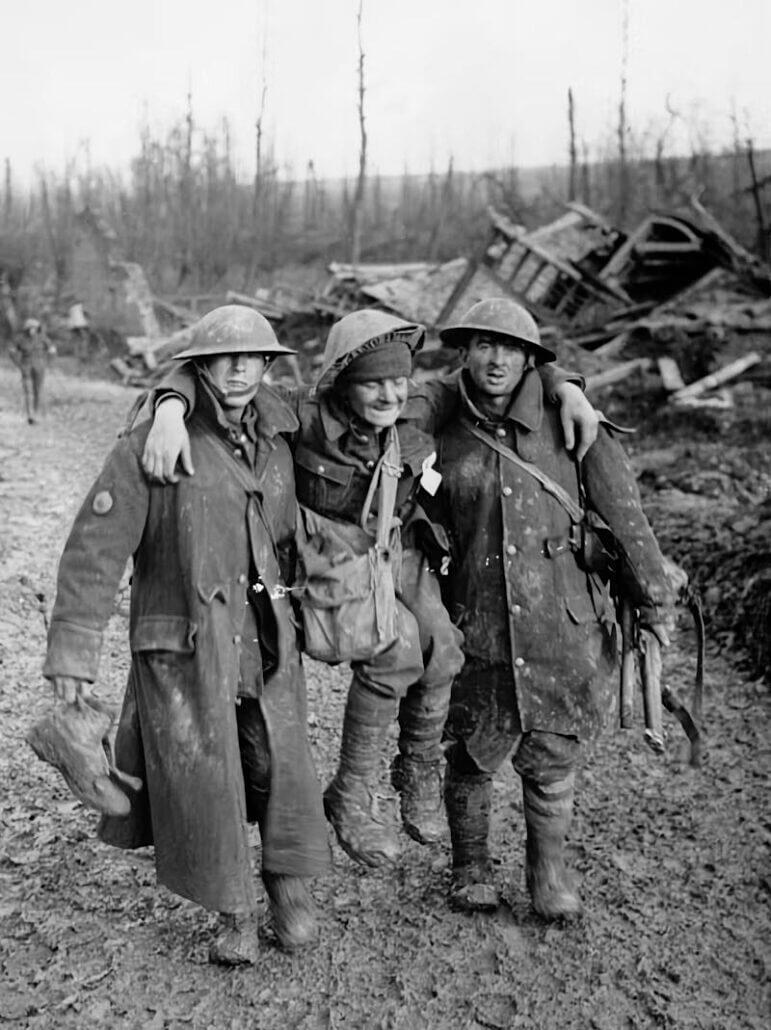
American Doughboys in the final year of the Great War, likely captured at the Meuse-Argonne Offensive.
Pearl Harbor was regrettable, but apparently our leaders determined that the loss of life was necessary in order to make a highly unpopular war seem necessary. Americans did not vote to intern Japanese citizens, nor did they vote to infect black soldiers with syphilis. But our politicians knew better. In the last two wars, the threat of weapons of mass destruction has led to wars that politicians wanted to fight against Iraq and Iran. And so democratic government does not just necessitate vote buying and election tampering, but also an occasional well-placed lie in order to meet the demands of governing in accordance with the desires of the moneyed interests.
A cynical interpretation might hold that extending suffrage to women and the poor was less about social justice than about creating larger, more easily mobilized voting blocs. Vast voter pools, especially ones that can be purchased through government programs, motivated by single issues or through perceived grievances brought on by other groups, are terrific tools to stay in power.
When these issues become supercharged with emotion, usually through manipulation of media sources or outright lies, they usher forth passionate armies that stand for a candidate or a political party. A much more economical way to hold a voter base together is to convince them that Neil, who coaches your son’s little league team, is a fascist because he’s a Republican, or that Ahmed, who runs the 7-11 next to the dry cleaner, is an existential threat.
One could be cynical and believe that our political class has nothing but disdain for their voters and that they are capable of literally any act to stay in power. One could even believe that because they have seemingly lied to us about everything from the reasons to go to war, the origin of a global pandemic financed by our own government, or the extent of government surveillance by the NSA, they would be capable of anything.
We could say that. But that would be undemocratic.
Related Markets
All MarketsMarket data may be delayed. Not financial advice.
How this story developed
Full timelineAlto has tracked this across 2 days of coverage from 1 outlet.
- The Potemkin BallotYou are here
Powered by Gab AI
The Story At A Glance
Reading this article now — analysis appears below
💡 AI analysis provides alternative perspectives on current events