US Private Credit Default Rate Remains At Record High: Fitch
.jpg?itok=UaH4jjH5)
The short version
- And after this week's report from Fitch Ratings, it appears any light at the end of the tunnel is an oncoming train.
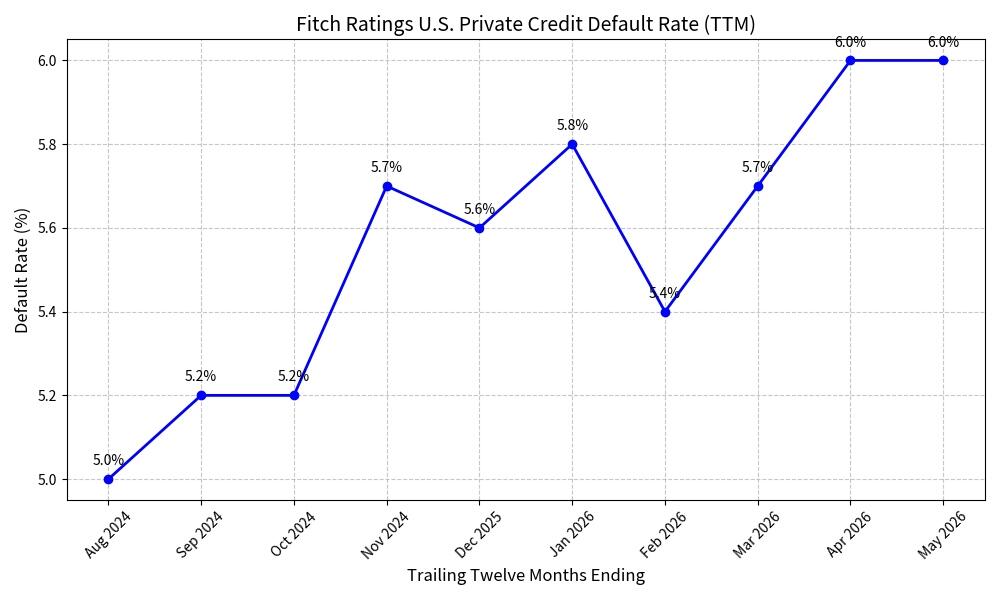
- As Andrew Moran reports for The Epoch Times , the U.S. private credit default rate remained at a record high in May , according to the latest update from Fitch Ratings.
- Private credit woes this year have taken a backseat to various headwinds and tailwinds, whether the war in Iran or SpaceX’s blockbuster debut on Wall Street.
- But data suggest that pressures are still mounting for the industry.
- Fitch Ratings said its Private Credit Default Rate remained at a record 6 percent in May, unchanged from the previous month.
The story
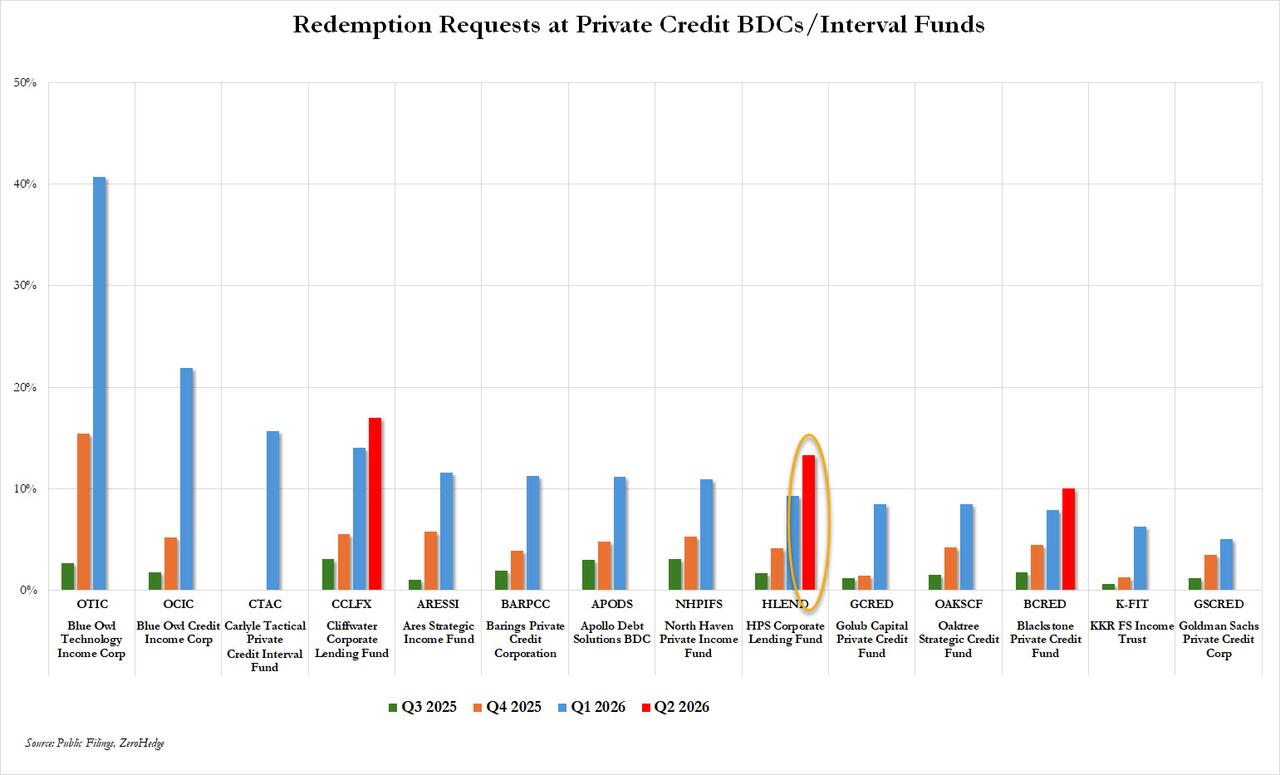
As we have detailed extensively, most recently here: "Blackrock's Private Credit Fund Gates Investors Again After Redemption Requests Surge ", private credit firms continue to face a flood of redemption requests...
And after this week's report from Fitch Ratings, it appears any light at the end of the tunnel is an oncoming train.
As Andrew Moran reports for The Epoch Times, the U.S. private credit default rate remained at a record high in May, according to the latest update from Fitch Ratings.
Private credit woes this year have taken a backseat to various headwinds and tailwinds, whether the war in Iran or SpaceX’s blockbuster debut on Wall Street.
But data suggest that pressures are still mounting for the industry.
Fitch Ratings said its Private Credit Default Rate remained at a record 6 percent in May, unchanged from the previous month.
Monitoring approximately 1,500 private credit issuers, Fitch logged 14 default events last month. Healthcare providers, business services, and industrial manufacturing each registered three events.
Six serial defaulters—issuers that have defaulted multiple times—were discovered by Fitch. Additionally, half of the default events consisted of maturity extensions under stress.
“This continued the prior month trend of maturity extensions under stress outpacing all other default scenarios,” Fitch reported.
“Five of the seven maturity extensions pushed loan maturities out by one to two years from their original maturity dates, while one extended the maturity by seven months and another extended it by one month.”
It is unclear whether the worst is over for the $2 trillion private credit sector, as more investment firms continue to see client exodus or impose capital redemption limits.
Turmoil Persists
In a recent letter to shareholders, BlackRock Private Credit Fund stated that shareholder repurchase requests reached more than 13 percent of outstanding shares in the second quarter, pushing past the investment vehicle’s 5 percent quarterly limit for the first time since it launched in June 2022.
Blackstone, the world’s largest alternative asset manager, said earlier this month that it is capping withdrawals at its flagship private credit fund as redemption requests surged in the April–June period. It reassured investors that limiting drawdowns would boost long-term gains.
Partners Group, the Swiss-listed fund manager, halted redemptions from its Global Value SICAV fund at 5 percent after withdrawal requests reached almost 10 percent.
David Layton, CEO of Partners Group, said the majority of withdrawals are coming from the retail side, which accounts for about 20 percent of overall investments.
“What you’re doing is you’re balancing the needs of certain investors—a small percentage of the fund that would like to get liquid—with the needs of the remaining segment of the investor population that would like to see that fund continue to invest and continue to compound,” Layton said in a June 3 interview with Bloomberg TV.
The Swiss private markets juggernaut later shot down reports that it would cap more fund withdrawals following a spike in drawdown requests.
“Partners Group has no intention of altering any documented liquidity mechanisms and has no plans to freeze any of its evergreen vehicles, given their portfolios are healthy and they have sufficient liquidity in line with the target allocations,” it said in a June 12 statement.
Systemic Risk ‘Less Pronounced’
Concerns that private credit could be the next subprime meltdown after 2008 and 2009 have been widespread, fueled by growing retail participation and the “SaaSpocalypse.”
Private credit is widely exposed to the software sector, accounting for up to 20 percent of its loans. When software stocks were hammered earlier in the year due to worries that artificial intelligence would upend business models, the private credit industry also took a beating.
But a chorus of market watchers argues that systemic risks are minuscule.
“Systemic risk appears far less pronounced than between sub-prime and the financial system in 2008,” LSEG analysts said in a June 15 analysis.
“We note that [private credit] largely withstood the Covid and Ukraine shocks in 2020-22 and that both lenders and borrowers are well aware of the risks involved in these loans, whence the covenant-protection is generally greater.”
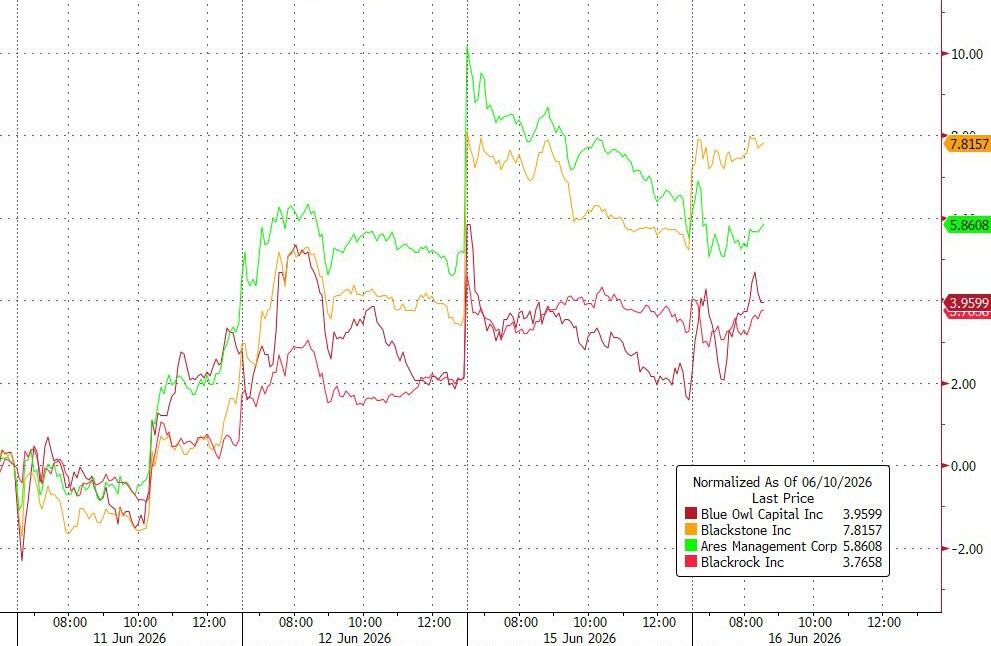
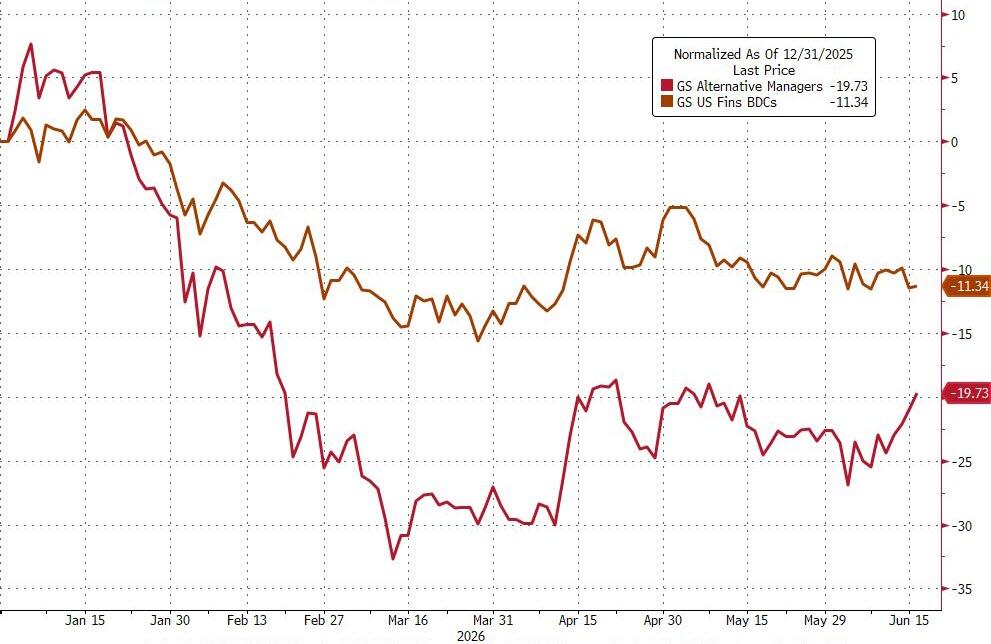
Investors seem to agree, as private credit stocks joined the broader market rally over the last few days.
Still the bounce remains modest amid YTD declines...
Related Markets
All MarketsMarket data may be delayed. Not financial advice.
How other outlets covered this
Compare allAlto found this story at 4 outlets. Same event, different framing — compare the headlines.
- ZeroHedge"Strain Is Spreading": FT Exposes Private Credit Distress At Decade Highs9 days ago
- VentureBeatGLM-5.3 is here with advanced cyber capabilities — and reportedly already found a 'serious vulnerability' in Cursor12 days ago
- The VergeBluesky’s new CEO wants a big tent, not a bubble24 days ago
- APTouring Trump’s Washington: How the president is putting his imprint on the nation’s capital2 months ago
How this story developed
Full timelineAlto has tracked this across 17 days of coverage from 4 outlets.
Powered by Gab AI
The Story At A Glance
Reading this article now — analysis appears below
💡 AI analysis provides alternative perspectives on current events