"No Quick Fixes": Supply-Chain Deep Dive Shows Beef Prices To Remain High
The short version
- Herds are at generational lows after years of drought, rising feed costs, and pressure on ranchers.
- Supply gets squeezed → prices explode → families get hit.
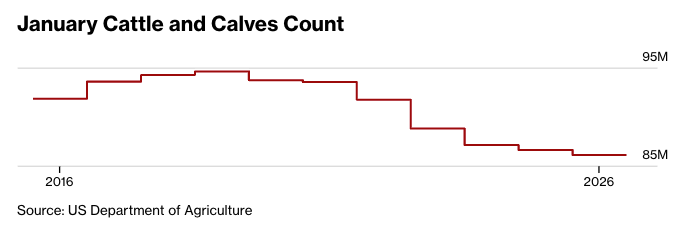
- A new Bloomberg report helps explain why beef prices are likely to remain sticky: the US cattle herd has fallen to its lowest level in 75 years.
- This supply shock has taken years to develop, and rebuilding will take years as well.
- The Trump administration promised to tame beef prices, even considering a deal with Argentina to import cattle and alleviate the shortage.
The story
We are all familiar with the surge in beef prices, driven by a U.S. cattle herd at more than a half-century low amid severe drought, elevated feed costs, higher financing expenses, and other inflationary factors, such as soaring diesel prices, squeezing ranchers.
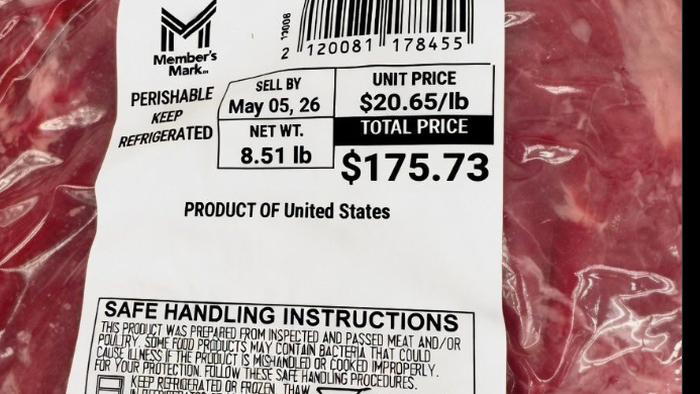
$175 for beef?!🥩
— Sherri Unfiltered™ (@FFT1776) May 4, 2026
$20.65 per pound … for one cut.
Herds are at generational lows after years of drought, rising feed costs, and pressure on ranchers.
Supply gets squeezed → prices explode → families get hit.
This was the Democrat push!
What are you paying for beef where… pic.twitter.com/c5HdnidaKA
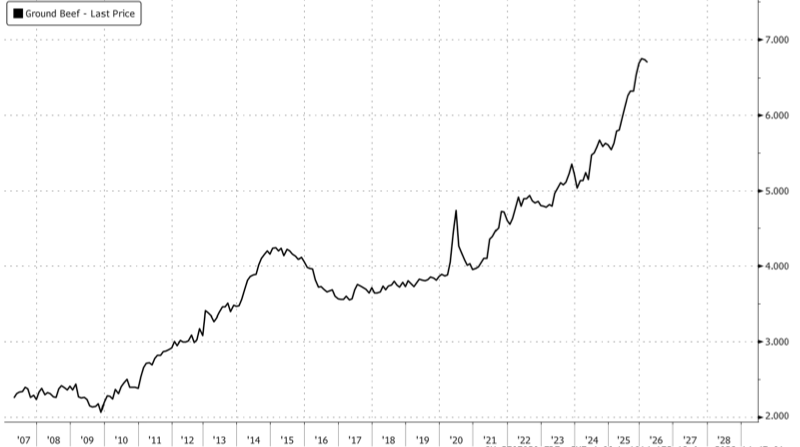
USDA data show average retail beef prices have been on a parabolic rise since the early days of the pandemic, with consumers facing sticker shock as soon as they step into any supermarket's meat department.
A new Bloomberg report helps explain why beef prices are likely to remain sticky: the US cattle herd has fallen to its lowest level in 75 years. This supply shock has taken years to develop, and rebuilding will take years as well.
The Trump administration promised to tame beef prices, even considering a deal with Argentina to import cattle and alleviate the shortage. However, it appears the administration has shifted from potential supply maneuvers to asking the Justice Department to investigate possible antitrust violations among processors.
On Monday, Tyson Foods, the nation's largest meat processor, reported another quarterly loss in its beef unit, highlighting that beef margins remain deeply negative even at the processing level. Tyson and other major meatpackers are being forced to pay premiums for scarce cattle, crushing margins that are being passed on to consumers.
"The reality behind expensive beef is complicated. There's no quick fix for tight supplies, as the sticker shock in the grocery aisles didn't happen overnight," Bloomberg agricultural reporter Ilena Peng wrote in a note, adding, "It's not just that the animals take a long time to grow. The complicated economics of cattle ranching also create pain points at key stages of production."
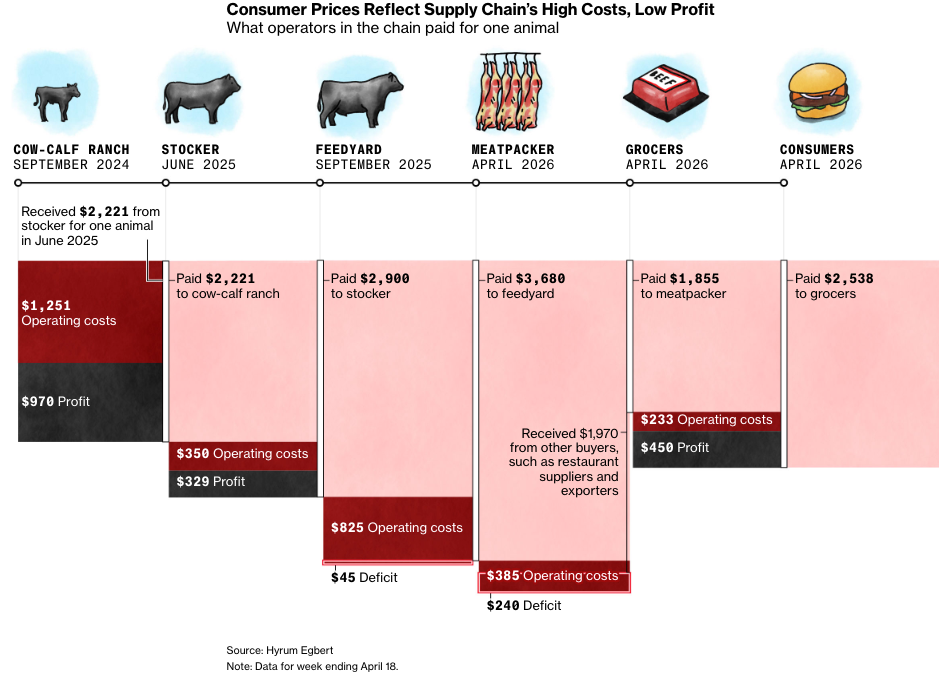
Peng walked readers through a hypothetical example of one animal's journey through the cattle supply chain, showing that the profit pool is heavily skewed toward the front end.
Cow-calf ranchers are currently seeing solid profits, but margins deteriorate further downstream - from stockers to feedyards and meatpackers - where operators remain under pressure. Grocers, meanwhile, have been able to pass higher costs on to consumers, particularly as beef demand remains robust.
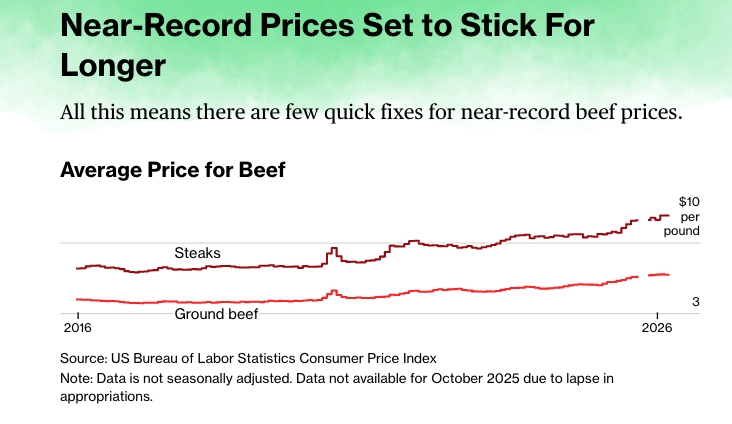
Peng warned readers, "All this means there are few quick fixes for near-record beef prices."
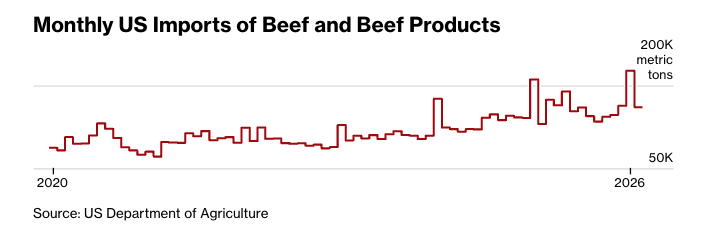
Monthly US Imports of Beef and Beef Products
January Cattle and Calves Count
"Pressures at every stage of the 18-month supply chain are expected to keep prices high at least through year-end," Peng continued.
This means beef prices may have to rise even higher into summer and enter demand-destroying territory. This is bad news for consumers ahead of cookout season.
Related Markets
All MarketsMarket data may be delayed. Not financial advice.
How other outlets covered this
Compare allAlto found this story at 6 outlets. Same event, different framing — compare the headlines.
- ZeroHedgeFutures Flat Ahead Of Key PCE Report, Nvidia Earningsabout 17 hours ago
- VentureBeatGoogle’s Gemini 3.7 Flash targets coding and agents with a 50% introductory price cut13 days ago
- AxiosIran war shows China role in setting the price of oil28 days ago
- Healthline NewsGeneric Mounjaro, Zepbound May Be Coming, Rivaling Current GLP-1sabout 2 months ago
- The VergeRange anxietyabout 2 months ago
- APEven with a deal to reopen the Strait of Hormuz, it could take weeks or months for oil to fully flow2 months ago
How this story developed
Full timelineAlto has tracked this across 34 days of coverage from 5 outlets.
Powered by Gab AI
The Story At A Glance
Reading this article now — analysis appears below
💡 AI analysis provides alternative perspectives on current events